Domestic Parcel Shipping Services
Mercury ships domestic parcels for life sciences and business clients, with same-day, next-day, and two-day delivery options and proactive tracking on every lane.
Parcel
BioPharma
Diagnostic Kits

The Compliance Gap in Domestic Parcel Shipping
When a pharmaceutical company ships a package domestically, the assumption is often that the hard work is done once the label is printed and the carrier collects it. In practice, the window between pickup and delivery is where most compliance failures happen. Temperature deviations go undetected until a delivery scan shows an unexpected location. Pickup failures are discovered by the recipient, not the sender. Documentation gaps surface during an internal audit weeks after the shipment closed.
None of these failures is the fault of the carrier in a formal sense. The carrier's responsibility is to move the package within its published service parameters. The responsibility for ensuring that those parameters are appropriate for the product, that the packaging is suited to the transit profile, and that the documentation meets GDP requirements sits with the shipper, or with a logistics partner who takes that responsibility seriously.
Mercury manages domestic parcel delivery as a regulated logistics service. Every shipment is assessed before it moves, monitored while it is in transit, and documented from pickup through final delivery confirmation. The carrier is a component of the service, not the whole service.
Carrier Selection for Regulated Cargo
Choosing the right domestic carrier for a life sciences shipment involves more than comparing transit times and rates. Service level reliability on a specific lane, temperature handling at sorting facilities, exception response capability, and the carrier's track record with pharmaceutical cargo all affect whether a shipment arrives in specification or not.
Mercury evaluates these factors for every domestic parcel booking. The selection is made against the requirements of the specific shipment: product temperature sensitivity, packaging configuration, pickup location, delivery address, and the timeline the client needs. Default routing does not apply when the cargo has a validated temperature range and a clinical or operational schedule attached to its delivery.
When a standard carrier service cannot meet the shipment's requirements, because of a late-day collection, a Saturday move, or a destination that falls outside a carrier's reliable service window, Mercury identifies the right alternative without requiring the client to escalate or manage the problem independently.
Temperature Monitoring and Excursion Prevention
Temperature excursions on domestic parcel shipments are underreported because most shippers do not find out about them until a product is already compromised. A package that spends two hours on a warm sorting belt, or sits unprotected on a delivery van through an afternoon in August, does not generate a carrier alert. The first indication is often a temperature logger reading at the delivery point, if a logger was included at all.
Mercury monitors temperature on qualifying domestic parcel shipments using calibrated devices that generate a continuous record throughout transit. Automated alerts are triggered when readings approach validated boundaries, which gives Mercury's team time to intervene before a breach occurs. Depending on the situation, the response may involve rerouting the shipment, coordinating an expedited replacement, or placing the package in a controlled facility while the temperature situation is assessed.
Understanding how FDA temperature monitoring rules apply to domestic pharmaceutical transit is the starting point for any organization that ships temperature-sensitive products. The requirement is not only to record temperature data, but also to act on deviations and document the response.
Chain of Custody and GDP Documentation
Every domestic parcel shipment Mercury manages is accompanied by a complete documentation record. This includes compliant labeling, chain of custody confirmation at each handoff point, temperature monitoring logs where applicable, and a signed delivery receipt at the final address. The record is finalized in Mercury's platform at the close of each shipment and is available to your quality team without requiring a documentation request or a post-shipment reconstruction effort.
For life sciences organizations operating under GDP guidelines, this matters beyond audit preparation. A documented chain of custody is the evidence that a shipment was managed correctly from end to end, that it was not left at an unsecured location, that temperature records are unbroken, and that every person who handled the package can be identified. Without that documentation, a shipment that arrived in perfect condition is still an unverifiable event.
Mercury's ISO 9001:2015 certification governs every process in the domestic parcel service, from packaging validation through final delivery documentation. For clients who require it, this certification provides the documented quality management framework that supports FDA, EU authority, and internal audit requirements without additional justification.
Packaging Suited to the Shipment, Not the Shelf
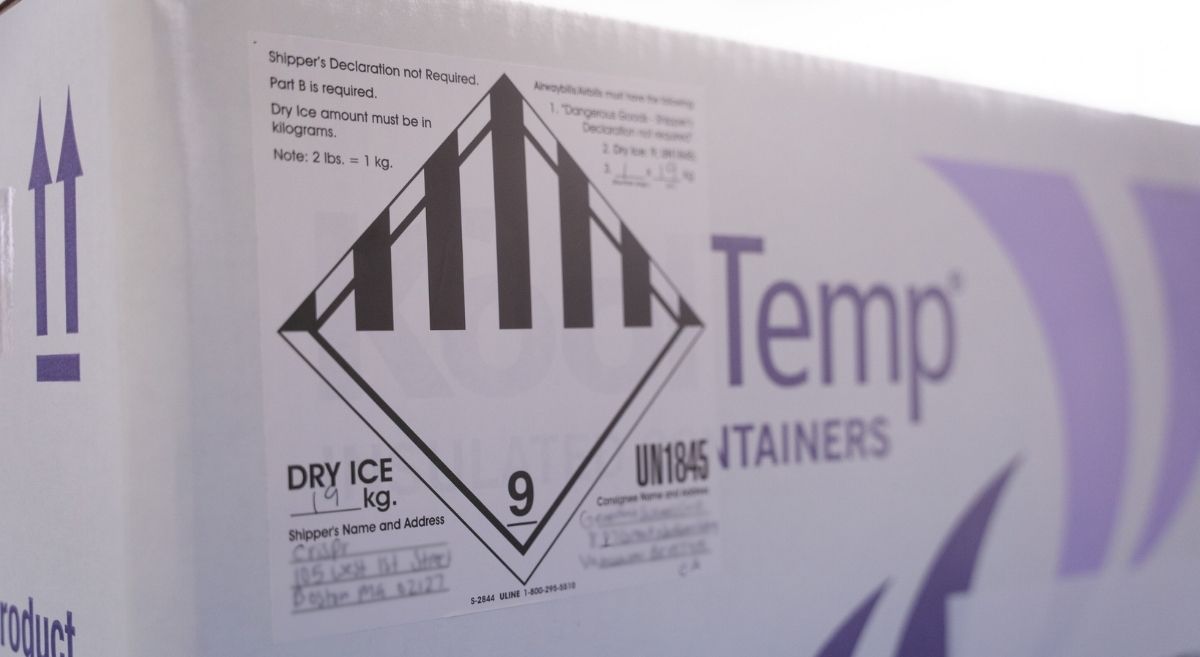
Packaging a domestic parcel shipment for regulated cargo requires a different starting point than selecting a box from the supply room. The outer packaging, the insulation configuration, the temperature indicator or data logger selection, and the dry ice quantity all need to match the transit profile of the specific shipment, its service level, its origin and destination climate conditions, and the validated temperature range of the product inside.
Mercury coordinates packaging directly with the pickup schedule. Thermal packaging, temperature indicators, and dry ice are prepared and ready before the carrier arrives, so that a late packaging decision does not push the shipment to the next day's pickup window. For clinical trial organizations managing kit distributions on a set dosing schedule, this coordination is not optional; a delayed pickup is a delayed patient visit.
Organizations that manage their own packaging can have Mercury's team review the configuration before the shipment moves. If the packaging is not suited to the transit profile, that conversation happens at booking. Not at delivery, when a temperature excursion report has already been generated, and the product is in question.
Exception Management When Something Goes Wrong
Domestic parcel shipments fail at predictable points. Missed pickups at facilities with strict security protocols. Carrier sorting errors that reroute a package to the wrong city. Weather events that close a hub and push a two-day service to four days. Delivery attempts at hospital or research facility addresses where the receiving department has restricted access hours.
For a standard shipment, each of these events generates a carrier notification and a rescheduled delivery. For a pharmaceutical or biotech parcel, each one is a potential temperature event, a chain of custody gap, or a clinical schedule disruption. The difference between an inconvenient delay and a product loss is often how quickly someone with the right authority intervenes.
Mercury's control tower monitors all active domestic parcel shipments and responds to exceptions in real time. The team is staffed by logistics specialists, not a call center reading from a script, who can reroute a shipment, coordinate a same-day redelivery, or arrange an emergency replacement before the client's team has finished reading the carrier's delay notification.
Who Uses Mercury's Domestic Parcel Service
Mercury manages domestic parcel shipments for pharmaceutical manufacturers moving finished drug product between distribution centers and pharmacies, biotech organizations shipping biological specimens and research materials between lab sites, contract research organizations distributing investigational product to clinical sites, and medical device companies moving instruments, kits, and components to hospitals and research facilities.
The common thread across these clients is not the product, it is the requirement. Every organization moving regulated cargo domestically needs carrier selection that reflects the product's requirements, documentation that holds up to review, and an exception response capability that does not depend on the client's team catching a tracking anomaly at 11 PM. Mercury's domestic parcel service is built around that requirement, regardless of how frequently a client ships or how many shipments are moving on any given day.
For organizations evaluating their domestic logistics program, the right question is not whether the current process has failed visibly. It is whether the current process would catch a failure before it reached the delivery address, and whether the documentation would hold up if it did not.
Ready to Ship Domestically with Mercury?
Tell us what you are moving. Mercury's team will build the right carrier, packaging, and monitoring plan around your product requirements.