Key Benefits of Customs Brokers for Bio/Med Shipping
General
Parcel
Freight

Key takeaways
Life sciences customs clearance is a regulated discipline. Pharmaceutical, medical device, and biological shipments are subject to FDA, DEA, and USDA oversight — each with distinct documentation requirements, classification rules, and import conditions.
DSCSA compliance is a live obligation. Since November 2023, full electronic traceability is required at the lot level across the U.S. pharmaceutical supply chain. Import workflows not reviewed against current DSCSA requirements carry measurable compliance risk.
Correct HS classification determines both duty rates and regulatory treatment. Misclassification triggers incorrect duty assessments, increases examination rates, and creates post-entry correction exposure.
Temperature control does not pause at customs. Clearance delays can expose cold chain shipments to temperature risk — proactive coordination between the customs broker and logistics team is what closes that gap.
International shipments face multiple overlapping device regulations. The EU MDR, IVDR, and UK UKCA regime each operate independently. Assuming prior CE markings still satisfy current requirements is a common and costly mistake.
Integrating customs and logistics under one provider reduces failure points. When brokerage and transport are managed separately, documentation gaps fall between teams and clearance delays follow.
Navigating the Complexities of Life Sciences Shipments: The Role of Experienced Customs Brokers
Shipping pharmaceutical and medical device products involves a level of regulatory complexity that most standard freight operations are not designed to handle. From controlled documentation requirements to import permits and temperature-validated transport, every step demands careful attention. Experienced customs brokers are central to navigating these demands successfully, ensuring timely deliveries, sustained compliance, and the protection of product integrity at every handoff.
Understanding Life Sciences Shipments
Life sciences shipments cover a wide range of products: pharmaceuticals, biologics, medical devices, diagnostic kits, and biological specimens, including blood, tissue, and cell therapy materials. These shipments typically require specialized handling, validated temperature control, and packaging that meets both carrier and regulatory standards.
Regulatory oversight comes primarily from the FDA (Food and Drug Administration) and, for certain biological agents and animal-derived materials, the USDA (United States Department of Agriculture). Failing to comply with these agencies' requirements can result in customs holds, import refusals, product destruction, fines, and lasting reputational damage. Efficient customs clearance is not a convenience; it is an operational requirement.
The Value of Experienced Customs Brokers
Customs brokers working in the life sciences space bring a specific combination of regulatory knowledge and procedural fluency that general freight forwarders do not possess. They understand product-specific classification requirements, stay current with regulatory updates across multiple jurisdictions, and manage the documentation burden that accompanies every international movement of medical and pharmaceutical cargo.
This expertise translates directly into fewer delays, lower risk of customs examinations, and consistent compliance, even as regulations evolve.
Regulatory Compliance for Pharmaceutical and Medical Device Shipments
Regulatory compliance sits at the core of every life sciences customs engagement. Pharmaceutical shipments must meet FDA requirements covering labeling, serialization, and supply chain traceability. Medical devices are subject to classification-based oversight, with different pathways applying depending on risk level and intended use.
Customs brokers ensure clients understand which regulatory category their product falls into, what documentation is required for import or export, and which agencies need to be notified before a shipment crosses a border. They prepare and submit the required paperwork and provide ongoing support as shipments move through clearance.
DSCSA Compliance and Pharmaceutical Traceability
Since November 2023, the Drug Supply Chain Security Act (DSCSA) has required full electronic traceability for prescription pharmaceutical products moving through the U.S. supply chain. Trading partners, including importers and third-party logistics providers, must exchange standardized transaction data at the lot level, verify product legitimacy, and investigate and report suspect or illegitimate products.
For pharmaceutical importers, this means customs clearance now intersects directly with DSCSA-compliant data exchange. Experienced customs brokers understand how DSCSA obligations apply to import transactions and coordinate with compliance teams to ensure that serialized data, transaction statements, and verification records are in order before the product enters distribution. Organizations that have not reviewed their import workflows against current DSCSA requirements should do so as a priority.
Customs Documentation and Paperwork
The documentation required for life sciences customs clearance goes beyond a standard commercial invoice. Depending on the product and origin country, shipments may require import permits, health certificates, FDA Prior Notice filings for applicable biological products, controlled substance import authorizations from the DEA, and product-specific supporting data.
For medical devices, correct documentation includes FDA establishment registration and device listing information, not the FDA 510(k) premarket notification, which is a separate, pre-clearance submission made before a product reaches the market and is not part of the customs process. Confusing these two is a common error with real consequences: missing the right customs documentation causes delays, while incorrectly treating a marketing clearance as a shipping document creates compliance gaps.
Customs brokers prepare, verify, and submit all required documents and confirm accuracy before submission, including correct Harmonized System (HS) codes, which determine duty rates and regulatory treatment for every product category.
Preventing Customs Delays
Customs delays for life sciences products are not just operational inconveniences; they can compromise temperature-sensitive cargo, disrupt clinical trial timelines, or delay patient access to treatment. Experienced brokers address this by reviewing documentation before submission, identifying classification inconsistencies, confirming that entry requirements for the destination country are met, and maintaining current knowledge of any import restrictions that apply to the specific product category.
Mercury's 24/7 control tower monitors active customs situations in parallel with transit, so any emerging clearance issue is caught and addressed before it affects delivery timing.
Tariff Classification and Duties
Correct tariff classification is both a compliance requirement and a cost management tool. Misclassifying a medical device or pharmaceutical product can result in incorrect duty assessments, penalty exposure, and regulatory scrutiny. The tariff schedule for life sciences products is detailed, and small classification differences can carry significant financial and regulatory implications.
Experienced customs brokers work with their clients to identify the accurate classification for each product, apply any applicable duty relief programs, and document the classification rationale in case of an audit. Over time, consistent correct classification reduces duty costs and minimizes the risk of post-entry corrections.
International Shipping and Multi-Jurisdiction Compliance
International life sciences shipments face overlapping regulatory requirements that vary by product type, origin country, and destination market. In the European Union, medical devices are now regulated under the EU MDR (Medical Device Regulation 2017/745), which came into full effect in 2021, and the IVDR (In Vitro Diagnostic Regulation) which followed in 2022. Both regulations significantly changed conformity requirements, labeling rules, and authorized representative obligations for products sold in EU member states. Post-Brexit, the United Kingdom operates its own UKCA marking regime for medical devices, with separate registration and conformity requirements from the EU system.
Customs brokers with international life sciences experience understand these jurisdictional differences and prepare shipments accordingly, selecting the right documentation format, identifying the applicable conformity markings, and coordinating with import agents or authorized representatives in the destination country.
Temperature Control and Secure Handling
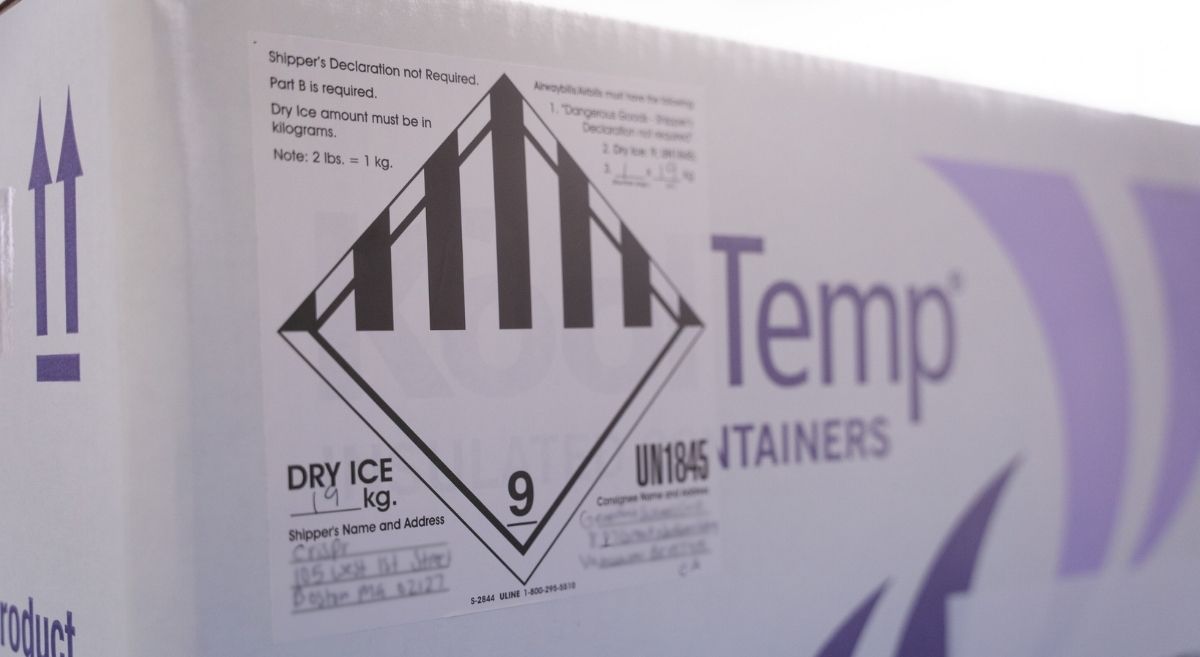
Many pharmaceutical and biological products require validated temperature conditions throughout transit. The FDA's temperature monitoring requirements specify how temperature data must be recorded and what documentation must accompany shipments. A gap in monitoring records is treated as a potential excursion, regardless of whether the product was actually exposed to out-of-range temperatures.
Customs brokers coordinate with the logistics team to ensure that cold chain requirements are maintained through customs handling and any storage that occurs during the clearance process. When clearance is delayed, proactive communication with the customs broker can trigger contingency arrangements, including priority examination requests or controlled temperature storage at the facility.
For the most time-sensitive biological materials, onboard courier services keep a trained professional in physical custody of the shipment from departure through customs clearance and final delivery, maintaining an unbroken chain of custody at every step.
Handling Customs Audits
Customs audits review classification accuracy, valuation, and documentation completeness. For life sciences importers, audits can also examine regulatory compliance records, confirming that FDA registrations are current, that import permits were obtained where required, and that DSCSA transaction records are properly maintained.
Experienced customs brokers prepare clients for audits by ensuring that entry records are well-documented, classification rationale is on file, and compliance programs are current. During an audit, having a knowledgeable broker available to respond to inquiries and provide context reduces the risk of misinterpretation and demonstrates that the organization operates within a managed compliance framework.
The Consequences of Poor Customs Management
Inadequate customs management in life sciences creates compounding risks. A single import hold can destroy a temperature-sensitive shipment, delay a clinical trial visit, or disrupt a hospital's surgical schedule. Recurring classification errors attract increased examination rates. Incomplete DSCSA records can trigger regulatory inquiries. And in the most serious cases, non-compliant imports are refused entry or destroyed at the importer's expense.
Working with experienced customs brokers does not eliminate all risk, but it replaces ad hoc problem-solving with a managed process, one where potential issues are identified before they become failures.
How Mercury Can Help
Mercury's customs brokerage services are built specifically for life sciences and pharmaceutical clients. Our brokers hold current knowledge of FDA, DEA, USDA, and DSCSA requirements, and work directly with Mercury's logistics teams so that customs and transport are coordinated through a single point of contact rather than managed as separate functions.
Mercury's ISO 9001:2015-certified processes govern every step from documentation preparation through final delivery. Our technology platform provides real-time shipment visibility, and our 24/7 human support team is available whenever a customs question or exception requires immediate attention.
For organizations managing clinical trial logistics across multiple countries, Mercury pre-clears documentation before shipments depart, reducing border delays that could compromise investigational product or disrupt patient visit schedules.
Conclusion
The complexity of life sciences customs clearance has grown in recent years. DSCSA traceability requirements, updated EU device regulations, post-Brexit UK market access rules, and ongoing FDA enforcement priorities all require customs brokers who stay current rather than relying on prior-year knowledge.
Businesses that partner with experienced, life-sciences-specific customs brokers reduce their exposure to delays, duties, and regulatory findings, and free their internal teams to focus on product development and clinical operations rather than customs administration.
Contact Mercury to learn how our customs brokerage and logistics team can support your next international shipment.
Start shipping today!
Start your shipment now — no login required. Fast, secure, and guided by experts.