Shipping GLP-1 Drugs: Cold Chain Requirements
General
Hybrid Parcel
Courier
Key takeaways
GLP-1 drugs require strict 2–8°C control with zero tolerance for freezing, making cold chain execution highly sensitive.
Excursion windows apply only at the patient level—not during shipping—leaving no margin for distribution errors.
Packaging must be lane-specific and seasonally validated to prevent both overheating and freezing risks.
DSCSA traceability and chain-of-custody data are critical for compliance and liability protection.
Last-mile delivery and real-time monitoring are key to maintaining product integrity through final delivery.
The Fastest-Growing Drug Class Has a Logistics Problem
GLP-1 receptor agonists have become the fastest-growing drug class in pharmaceutical history. The market expanded from $13.7 billion in 2019 to $71.7 billion in 2024 — a 423% surge in five years. Novo Nordisk and Eli Lilly have committed a combined $12+ billion in new manufacturing capacity, but production scale-up takes years to complete.
In the meantime, the distribution side of the supply chain faces a problem that factory investment alone cannot solve: getting GLP-1 drugs from the manufacturer to the patient, intact, on time, and within validated temperature conditions at every step of the journey.
For logistics professionals, specialty pharmacies, and pharma supply chain teams, GLP-1 drugs introduce specific cold chain requirements that differ from other injectable biologics. This article covers what those requirements are and where the distribution risks lie.
GLP-1 Temperature Requirements
All major GLP-1 injectable products require refrigerated storage and transport at 2–8°C. This applies to semaglutide (Ozempic, Wegovy), tirzepatide (Mounjaro, Zepbound), liraglutide (Victoza, Saxenda), and dulaglutide (Trulicity). The drugs are synthetic peptides dispensed in pre-filled pen injectors or glass cartridges that degrade outside validated temperature ranges.
Each product has defined excursion allowances once removed from the refrigerator. Semaglutide (Ozempic) tolerates up to 56 days at 15–30°C after first use. Wegovy allows up to 28 days at 8–30°C. Tirzepatide products allow up to 21 days at or below 30°C. These excursion windows apply at the patient level — they do not represent a shipping buffer for distribution.
The "Never Freeze" Rule
All GLP-1 injectables carry a strict prohibition against freezing. Ice crystal formation damages the peptide structure and compromises efficacy in ways that are not visible to the patient. A frozen and re-thawed pen injector looks identical to an intact one.
This makes the GLP-1 cold chain more demanding than simple refrigeration. Shippers must maintain 2–8°C throughout transit while simultaneously preventing the product from reaching 0°C. A frozen excursion is as damaging as a warm one — and harder to detect at the point of delivery.
Packaging and Dry Ice Risks
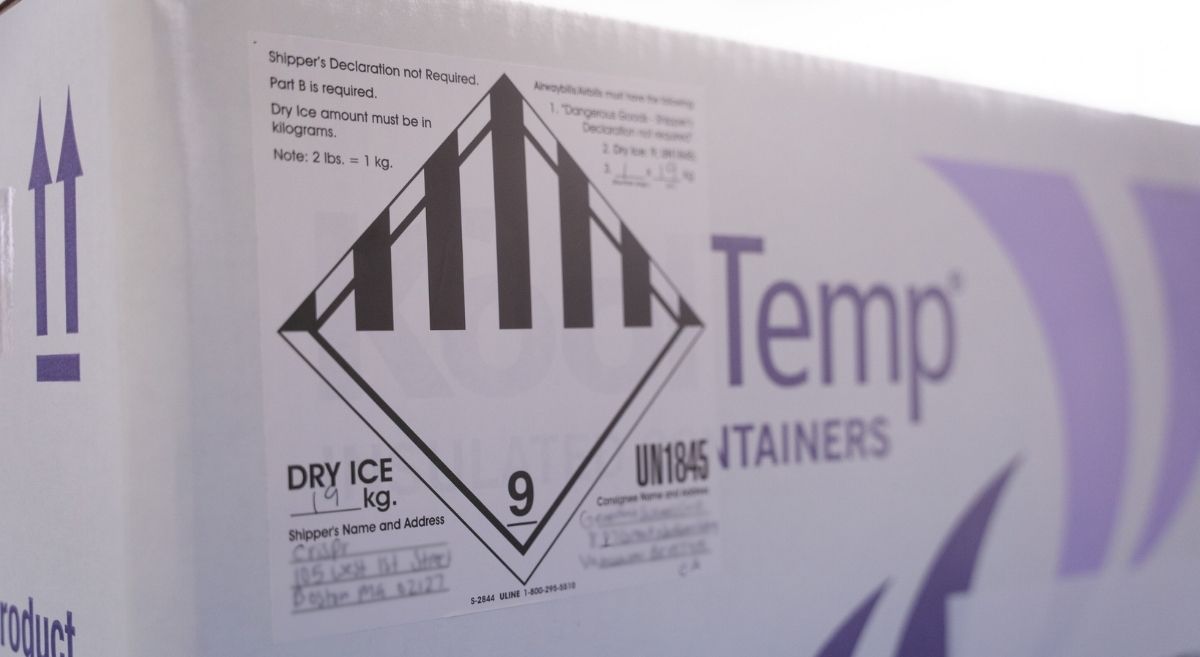
Standard pharmaceutical cold chain packaging for GLP-1 products uses pre-conditioned gel packs or phase change materials (PCMs) validated to maintain 2–8°C across defined transit durations and ambient conditions. Unlike biologics that ship at −20°C to −80°C, GLP-1 drugs must never contact dry ice directly or travel in active cryogenic systems — both environments risk freezing the product.
Validated PCM vs. dry ice selection becomes a critical packaging decision for GLP-1 shipments, particularly across seasonal temperature extremes. A summer lane from a Texas warehouse to a Florida specialty pharmacy presents different thermal challenges than a winter lane from Boston to Minnesota. Packaging must be validated under both worst-case conditions, not just average ambient temperatures.
DSCSA Serialization for GLP-1 Distribution
GLP-1 drugs fall under standard Drug Supply Chain Security Act (DSCSA) requirements. Every dispensing unit carries a unique 2D barcode encoding the NDC, serial number, lot number, and expiration date. Distributors and dispensers must capture and exchange Transaction Information, Transaction History, and Transaction Statements (T3 data) at every change of ownership.
Mercury's DSCSA-compliant distribution processes capture T3 data at every handoff point. For GLP-1 shipments, this traceability layer serves a practical purpose beyond compliance: it provides documented proof of chain of custody if a temperature excursion claim arises.
This documentation protects distributors and specialty pharmacies from liability for product integrity failures that occurred elsewhere in the chain — a critical safeguard when a single unit costs over $1,000.
Specialty Pharmacy and Last-Mile Challenges
GLP-1 drugs primarily distribute through specialty pharmacy channels. This creates last-mile cold chain challenges that differ from hospital or clinic delivery. Specialty pharmacies handle pack-out at high volumes, ship direct to patient homes, and must maintain 2–8°C through the final carrier leg — a segment of the supply chain where cold chain compliance is hardest to control.
Home delivery adds another variable: the patient receives a shipment that has traveled in a carrier vehicle without active temperature control, potentially in summer heat. Validated insulated packaging with adequate coolant mass must protect the product through the delivery window, including the time the package sits on a doorstep or in a mailroom before the patient retrieves it.
Mercury's specialty cold chain network supports GLP-1 distribution with lane-validated packaging, continuous temperature monitoring devices, and same-day delivery options for specialty pharmacies and clinical dispensing sites that need urgency alongside compliance.
Monitoring and Documentation
Effective GLP-1 logistics requires temperature documentation that satisfies FDA temperature monitoring requirements under GDP. Every shipment should carry a calibrated data logger that records continuous readings throughout transit.
These records establish that the product arrived within validated conditions — essential for specialty pharmacies dispensing high-cost products who must respond to patient excursion claims with documented evidence rather than estimates.
Good Distribution Practice (GDP) guidelines require that temperature data be available for review, that deviations trigger documented investigations, and that risk assessments determine product disposition when an excursion occurs. For a GLP-1 product priced at $1,000+ per month, accurate excursion data protects both patients and distributors from guesswork about product integrity.
Mercury's 24/7 control tower monitors active GLP-1 shipments with automated alerts when readings approach the validated boundary — enabling intervention before a breach, not after. Complete chain-of-custody records accompany every shipment for audit and regulatory review.
What GLP-1 Logistics Requires in Practice
Meeting GLP-1 cold chain requirements demands lane-specific packaging validation, pre-conditioned refrigerants, continuous data logging, DSCSA-compliant handoff documentation, and last-mile packaging designed to handle patient-side delays. It also requires couriers and handlers who understand the "never freeze" constraint — not just the refrigeration requirement.
Temperature deviations in GLP-1 distribution often trace back to gaps in carrier handoffs, inadequate coolant mass for longer lanes, or packaging validated for one season but not another. These are preventable failures with the right lane-specific packaging protocol and carrier management.
Mercury's cold chain experience with injectable biologics directly applies to GLP-1 shipping. The refrigerated range and the sensitivity to freezing create the same handling discipline requirements that Mercury applies to higher-acuity biologic products.
As GLP-1 demand continues to outpace manufacturing capacity, distribution reliability becomes a competitive differentiator for specialty pharmacies and wholesale distributors. The providers who invest in validated, documented cold chain processes now build the infrastructure that the GLP-1 market will depend on for the next decade.
GLP-1 distribution intensifies an existing pressure in pharmaceutical logistics: the need to demonstrate control, not just assert it. Regulators, manufacturers, and patients require evidence that temperature conditions were maintained throughout the supply chain — not a verbal confirmation or a shipper's general policy.
That evidence comes from calibrated devices, complete custody records, and documented excursion investigations at every link in the chain. Building that capability now prepares distributors for a GLP-1 market that will only continue to grow.
For pharma companies and specialty pharmacies managing other refrigerated drug categories alongside GLP-1s, Mercury's Healthcare Logistics platform supports the full range of temperature-controlled distribution requirements under one quality system.
As GLP-1 demand grows, so does the need for reliable cold chain logistics. Mercury helps teams ship with confidence through validated processes and real-time visibility. Connect with Mercury to strengthen your distribution strategy.
Start shipping today!
Start your shipment now — no login required. Fast, secure, and guided by experts.