Same Day Lab Courier and NFO for Lab Operations

Jim Turk
COO
Key takeaways
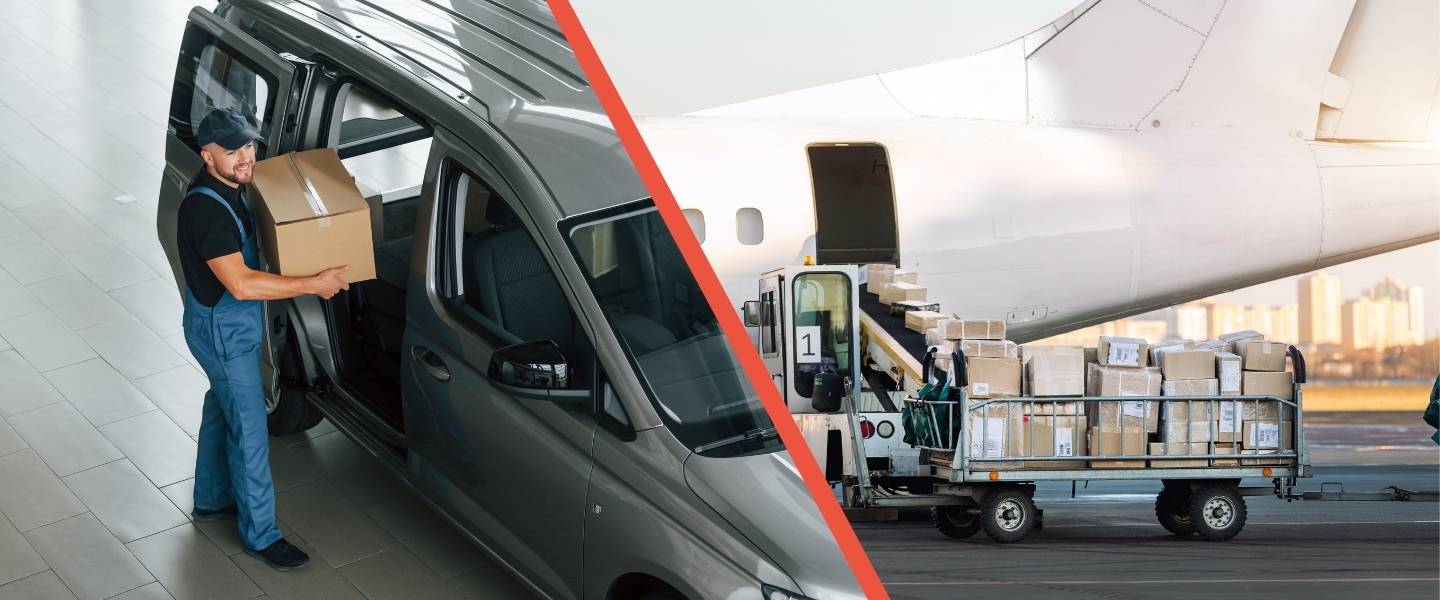
A same day lab courier picks up and delivers on the same calendar day, by direct vehicle for regional routes or by next flight out when the distance is too far to drive.
Labs get the most from same-day service when they write clear triggers for it into their SOPs instead of deciding under pressure.
Inter-lab specimen transfer works best on a fixed schedule with STAT runs on top, matched to each specimen's stability limits.
Under the CLIA rules in 42 CFR 493.1242, a lab must have written procedures for specimen transport conditions and must record the date and time it receives a specimen.
Category B specimens and dry ice still have to be packed and marked under the federal hazardous materials rules when they move by courier or airline.
The cheapest service is the one that meets the stability window with the least handling, so cost should be judged per usable result, not per run.
A same day lab courier is the tool laboratory teams use when a specimen, reagent or kit has to move today and the next parcel cycle is too late. For a regional move, a driver collects the package and drives it straight to the receiving lab. When the distance is too far for that, the package goes on the next available commercial flight, with couriers at both ends. Used well, the two services become part of lab operations logistics rather than an emergency patch.
This article looks at the lab operations side: when to call for same-day service, how labs move samples between sites, how chain of custody holds up through each handoff, and how to weigh courier cost against turnaround time. If you need the full mechanics of next flight out, including airline cutoffs and dangerous goods limits on passenger aircraft, see our guide to next flight out for urgent temperature-controlled deliveries.
How fast is same-day shipping for labs?
Same-day shipping for labs means the package is picked up and delivered on the same calendar day, and the actual transit time depends on the distance and the mode. A local or regional run with a dedicated driver is usually measured in hours, because the vehicle goes straight from your bench to the receiving dock without hub sorting. Longer routes use same day air shipping on a commercial flight, where the total time is driven by the drive to the airport, the airline's cargo cutoff, the flight itself and the recovery at the destination.
So the honest answer to "how fast is same day shipping" is that it is as fast as the route allows, and same day shipping for labs is only as reliable as the timing behind it. A useful planning habit is to work backward from the time the receiving lab must have the material in hand, then check whether a driver can make that time. If not, ask for an air option and the latest pickup time that still connects to a flight.
The three speeds labs actually use
Most lab shipping needs fall into one of three service levels. The table below compares them on the points lab managers usually care about.
Service | Typical use in a lab | What sets the speed | Main limits |
|---|---|---|---|
Same-day ground courier | Specimens between local sites, reagent top-ups from a nearby warehouse, kits to a clinic | Distance, traffic, pickup readiness | Practical only within driving range |
Next flight out | Coast-to-coast samples, urgent reagent delivery to a distant partner lab | Airline cutoff and flight schedule | Airline acceptance, dangerous goods rules, weather |
Overnight express | Planned transfers with a next-morning deadline | Carrier network cutoffs | Hub handling, limited weekend service |
The table shows why a lab rarely relies on only one option. Ground is the most controlled for short moves, next flight out covers distance, and overnight express is still the right answer when the deadline really is tomorrow morning and the material tolerates a night in a carrier network. For a side-by-side look at the first two, read our comparison of same-day shipping vs next flight out.
When should a lab use a same-day courier?
A lab should use a same-day courier when waiting for the next scheduled pickup or the next parcel cycle would put the material outside its stability window, delay a result someone is waiting on, or stop work at the receiving site. The decision should come from the material and the deadline, not from habit.
Common triggers in lab operations include:
STAT specimens where a clinician or study team is waiting on the result
Specimens with short room-temperature stability that will not survive a hub network
Urgent reagent delivery when a run will stop because a lot has run out or failed QC
Instrument parts or consumables that are holding up a validated assay
Clinical trial samples tied to a visit window or a protocol deadline
Re-collections or replacement kits after a rejected specimen
Writing these triggers into your standard operating procedures saves time when it matters. The SOP can name who is allowed to request a same-day run, which cost center pays for it, and when the team should escalate to an air option. Labs that leave this undefined tend to argue about cost while the clock runs, which is exactly the delay the courier was meant to prevent.
When next flight out is the better call
Next flight out fits when the distance is too far to drive within the deadline, for example a tissue sample that must reach a partner lab across the country the same day. The provider books the next usable flight, a courier tenders the package to the airline, and another courier recovers it on arrival and drives it to the lab. Some materials cannot go this way, and airlines have their own acceptance rules, which our next flight out guide explains in more detail.
How do labs move samples between sites?
Labs move samples between sites with a mix of scheduled courier routes and on-demand runs, and the most reliable programs combine both. A scheduled route collects from collection sites, satellite labs or clinics at fixed times every day. On-demand runs sit on top of that schedule for STAT work and anything that cannot wait for the next stop.
A well-run inter-lab specimen transfer program usually follows this sequence:
Define each specimen type, its transport temperature and its maximum time from collection to receipt.
Design routes and pickup times around those limits, starting with the specimens that have the shortest stability.
Agree on packaging for each temperature range, including refrigerant amounts sized for possible delays.
Set up a manifest or requisition that travels with the package and matches the sending lab's records.
Confirm receiving hours and a named contact at the destination, including after-hours arrangements.
Record pickup, handoffs and receipt with times, and review exceptions every week.
The rules behind this are not only good practice. Under the CLIA requirements at 42 CFR 493.1242, a laboratory must establish and follow written policies for specimen storage and preservation, conditions for specimen transportation, and specimen acceptability and rejection. The same section requires the lab to document the date and time it receives a specimen. A courier program that cannot give you reliable pickup and delivery times makes that harder to show.
Packing rules still apply on a short drive
A short distance does not remove the packaging rules. Diagnostic specimens shipped as Biological Substance, Category B (UN3373) must meet the triple packaging requirements in 49 CFR 173.199, including a leakproof primary receptacle, leakproof secondary packaging and a rigid outer packaging. Frozen specimens packed with dry ice also fall under 49 CFR 173.217, which requires packaging that lets carbon dioxide gas escape. Our guide to shipping UN3373 samples safely and legally walks through the packing steps, and how much dry ice you need covers refrigerant sizing.
How do you keep chain of custody on lab couriers?
You keep chain of custody on lab couriers by recording every person who holds the package, with the time and condition at each handoff, from the moment it leaves the bench until the receiving lab signs for it. In practice that means a pickup scan or signature, a record of any transfer to an airline or another driver, and a time-stamped delivery confirmation with the receiver's name.
Good custody records answer four questions without anyone having to chase a driver:
Who collected the package, and when?
Where was it, and who had it, at each step?
Was the seal or tamper evidence intact, and was the temperature in range?
Who received it at the destination, and at what time?
Direct-drive service helps here, because fewer handoffs means fewer gaps. When a package must change hands, for example at an airport, ask how the provider records that transfer and how quickly you can see it. GPS trackers and temperature loggers add evidence, but they do not replace signatures and times. Keep patient details off the outside of the package and off tracking notes, and use the specimen or shipment identifier instead. Our article on the role of chain of custody in life science shipping goes deeper on records and audits, and our guide to choosing a medical lab courier service covers how to test a provider before you commit.
How do labs balance courier cost and turnaround time?
Labs balance courier cost and turnaround time by pricing the failure, not just the run. A same-day trip costs more than a parcel label, but a rejected specimen, a re-collection, a delayed result or a stopped instrument often costs far more. The right comparison is the cost per usable result, including the chance that a slower option misses the stability window.
A few practical levers keep costs under control without slowing critical work:
Consolidate routine transfers onto scheduled routes and save on-demand runs for real STAT needs.
Set pickup times that match when specimens are actually ready, so drivers do not wait or return.
Use ground for regional routes and reserve same day air shipping for distances a driver cannot cover in time.
Book early in the day when you can, since late requests narrow the flight and driver options.
Review monthly which on-demand runs could have been planned, and fix the upstream cause.
A simple way to decide on each shipment
The table below turns those levers into a quick decision guide. It is a starting point, and your own stability data and SOPs should take priority.
Situation | Usual choice | Why |
|---|---|---|
Routine specimens, stable for a day or more, local sites | Scheduled courier route | Lowest cost per specimen with predictable timing |
STAT specimen, receiving lab within driving range | Same-day ground courier | Fastest controlled option with the fewest handoffs |
Urgent sample or reagent across the country, needed today | Next flight out | Only option that closes the distance the same day |
Deadline is tomorrow morning, material tolerates transit | Overnight express | Meets the deadline at lower cost |
The pattern is that cost should follow the deadline and the material. When a lab defaults to the most expensive service for everything, budgets suffer. When it defaults to the cheapest service for everything, specimens fail. A short written decision rule, reviewed with real exception data, avoids both.
Building same-day and NFO into lab SOPs
The labs that use courier services well treat them as part of their procedures, not as a phone call someone makes in a hurry. A short SOP section for urgent shipping usually covers:
The triggers for same-day ground and for next flight out
Who can approve and book, including after hours and on weekends
Packaging and labeling instructions for each specimen type and temperature range
Contingency steps for a missed flight, a vehicle issue or a closed receiving dock
Training records for staff who pack and hand over shipments
Contingency planning deserves its own line. Decide in advance what happens if a flight is cancelled or a receiving lab cannot accept after hours. Options include holding the package at a controlled temperature, re-icing, moving to a later flight or switching to a drive. If the plan exists before the problem, the courier team can act on it without waiting for a decision from someone who is in a meeting.
Returns, re-routes and multi-site deliveries
Lab operations logistics also includes the less visible moves: returning unused kits, re-routing a package when a site changes, and splitting one origin into several destinations. Ask any laboratory courier how they handle a change of destination after pickup, how new labels and documents are produced, and how the change is recorded in the custody trail. Those answers tell you more about a provider than a standard delivery does.
How Mercury supports lab operations
Mercury's same-day courier service is built for life science and healthcare teams, with dedicated drivers, proactive tracking and 24/7 dispatch availability. When distance rules out a drive, Mercury's next flight out service books space on passenger airlines, favoring direct flights when possible, and arranges courier pickup and recovery at each end. GPS trackers are available for clients who want to see where a shipment is at all times, and the Mercury Portal lets teams track shipments, receive alerts and share status with recipients. For labs handling biological specimens or reagents, that combination covers the local runs and the long-distance moves from one point of contact.