Live Cell Shipping: Time-Critical Logistics Guide
General

Key takeaways
Cell viability declines rapidly outside the body, creating narrow shipping windows of 36-48 hours that demand precise coordination
Traditional standard shipping methods are giving way to Cellbox active shipper technology maintaining 37°C incubator transport
Confirmed flight bookings for cell therapy logistics with backup options prevent delays that compromise irreplaceable materials
Proper storage at origin and destination airports prevents temperature changes affecting cell structure and plasma membrane integrity
Accurate HTS codes and FDA-compliant labeling on shipping containers prevent customs clearance delays
Real-time temperature monitoring for live cell transport provides chain of custody documentation for regulatory compliance
The Challenge of Transporting Living Biological Materials
Live cell shipment represents one of the most demanding challenges in healthcare. Unlike frozen therapies, certain cell types require controlled room temperature transport to maintain function. These materials cannot tolerate temperature changes, delays, or mishandling during the shipping process.
Cell viability begins declining immediately after collection from patients or donors. Research shows that fresh biological specimens maintain optimal quality for only 36-48 hours under ideal conditions. This narrow window demands flawless execution from pickup through final delivery times.
Temperature Control: Active Systems for Physiological Conditions Shipping
Traditional live cell shipping occurs at +15°C to +25°C. However, these approaches expose samples to non-natural environments that can trigger stress affecting cell membranes and cell structure.
Companies like Cellbox Solutions developed active temperature control systems maintaining laboratory-standard environments during transport. The Cellbox active shipper provides 37°C incubator transport with 5% CO2 atmosphere for up to 48 hours, mimicking conditions inside the human body. This technology eliminates damage associated with freeze-thaw cycles while maintaining cell viability maintenance throughout transit.
Active temperature control for cell therapy transport offers significant advantages over passive cold chain solutions. Samples remain metabolically functional under physiological conditions shipping without requiring protective agents. Studies demonstrate that live shipment delivers 2.5 times more working material after recovery compared to frozen methods—a cost effective approach for time-sensitive biological materials.
Time-Critical Logistics: Confirmed Flights and Backup Planning
Packaging validation periods define the maximum transit time for live cell shipping. Most validated systems guarantee performance for 48-72 hours under specified conditions. Exceeding these timeframes voids quality assurance and potentially compromises patient safety in business days ahead.
Airlines prioritize cell therapy logistics through specialized handling procedures. Mercury coordinates with airline partners to secure confirmed flight bookings rather than relying on space-available arrangements. We evaluate multiple routing options before dispatch, identifying backup flights that maintain required delivery times if primary arrangements encounter disruptions.
Flight confirmation becomes critical for international shipping crossing multiple time zones. A missed connection can add 24 hours to transit, pushing shipments beyond validated packaging performance. Our operations teams monitor flight status continuously, proactively rebooking on alternative flights when delays threaten schedules across the supply chain.
Airport Storage Infrastructure: Protecting Samples During Transit
Origin and destination airports must provide appropriate storage during handling periods. Many facilities lack specialized infrastructure for maintaining proper temperatures during cargo processing at the delivery option stage. This gap creates risk points where excursions can compromise product integrity.
Mercury partners with airport facilities offering temperature-controlled cargo areas meeting pharmaceutical handling standards. We verify storage capabilities at each location before accepting shipments. Our team coordinates directly with ground handling agents to ensure immediate transfer from aircraft to controlled environments.
For shipments requiring 37°C maintenance, we arrange preconditioning of storage areas and coordinate timing to minimize exposure to ambient conditions. Active shippers maintain internal environments independently, but proper airport handling reduces battery drain and extends operational performance.
Customs Clearance: Speed and Accuracy for Time-Sensitive Biological Materials
Customs clearance delays represent a critical failure point for time-critical shipping for irreplaceable cell samples. Even 12-24 hour holds can push shipments beyond their functional windows, destroying valuable patient materials and delaying potentially life-saving therapies.
Mercury prechecks all documentation before dispatch to identify and resolve potential issues proactively. We verify HTS code accuracy, prepare FDA-required affirmations, and ensure the commercial invoice contains complete product descriptions with accurate country of origin information. Our customs broker expertise ensures all entry requirements are met for smooth customs clearance process execution.
Our team submits entry documentation electronically before arrival, allowing FDA review to occur while products are in transit. This advance filing eliminates typical delays before customs authorities begin reviewing submissions. For international shipment crossing borders, we coordinate with importing country officials to arrange expedited processing procedures, managing requirements that vary depending on destination regulations.
Working with an experienced customs broker streamlines the customs clearance for time-sensitive biological shipments, ensuring documentation accuracy and preventing costly holds. Mercury's expertise in navigating customs and border protection requirements helps maintain the strict timelines that maintaining cell viability during international shipping demands.
Labeling Requirements: Preventing Holds Through Proper Documentation
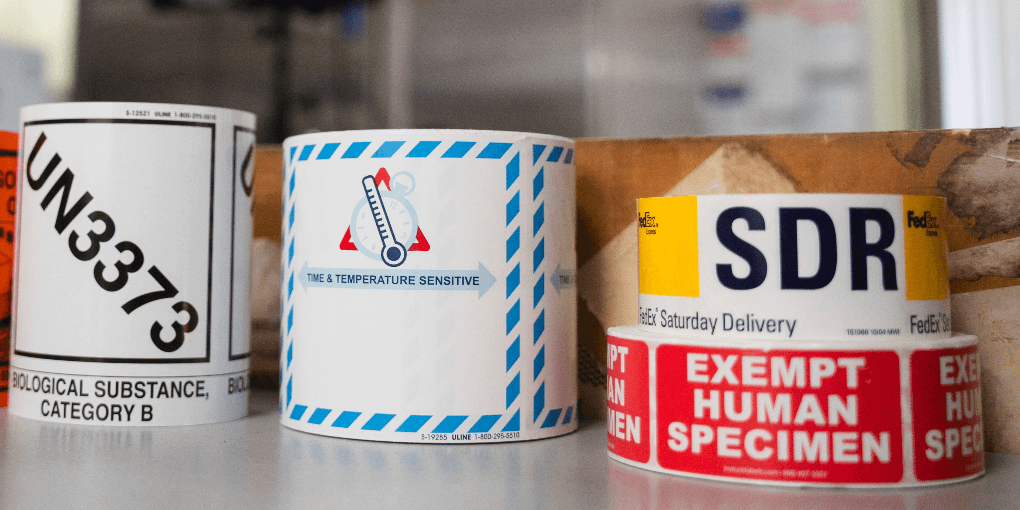
Incorrect or incomplete package labeling causes immediate holds that jeopardize samples. Shipping containers must display appropriate hazard labels for any dangerous goods components, including dry ice used in CO2 generation systems or lithium batteries powering active equipment.
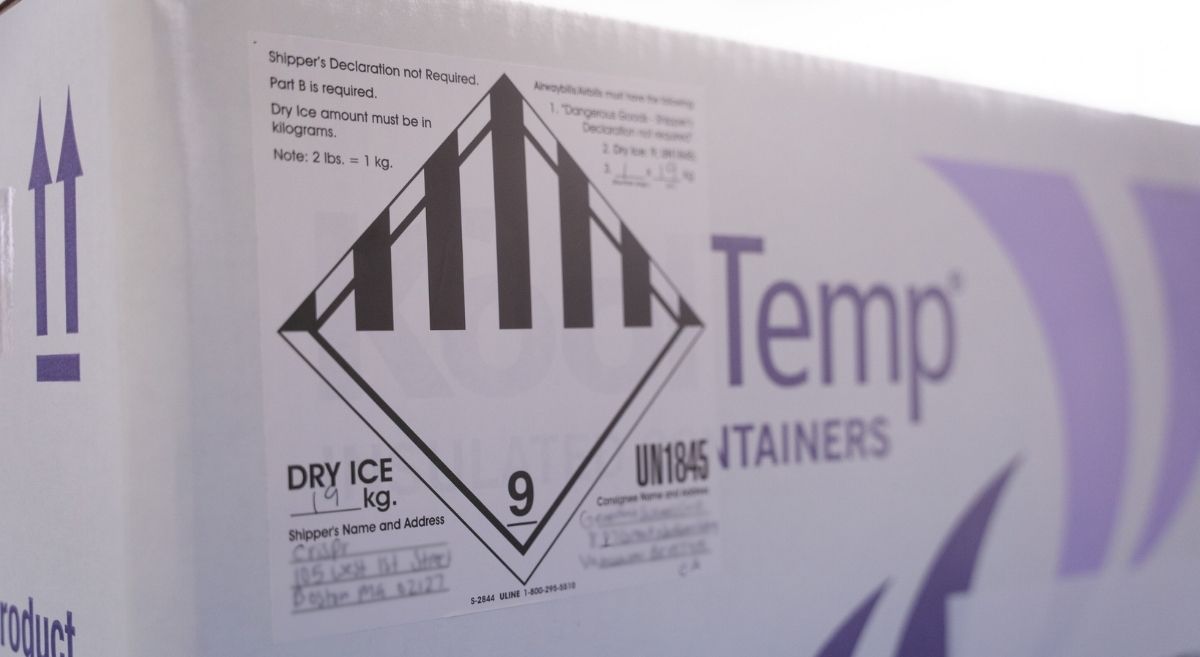
Cellbox Flight shippers require UN3481 labels for lithium-ion batteries and UN1845 labels for dry ice components. Failure to apply these correctly results in cargo acceptance refusal or detention. Mercury's quality control procedures verify all required labels before releasing to carriers, ensuring compliance for import or export operations in the United States and internationally.
Package exteriors must clearly identify contents as biological materials requiring priority handling. We apply "Time and Temperature Sensitive" labels prominently on all sides of shipping containers, along with directional arrows indicating proper orientation. These visual indicators alert cargo handlers that special care is required throughout the supply chain.
Chain of Custody: Real-Time Temperature Monitoring for Live Cell Transport
Cell therapy logistics require complete chain of custody documentation of environmental conditions and location throughout transit. Regulatory agencies demand proof that temperature remained within specifications and that custody transferred properly between authorized handlers at each step.
Mercury embeds real-time temperature monitoring devices and GPS trackers in every live cell shipment. These transmit data continuously to our platform, creating an auditable record meeting chain of custody tracking requirements. Temperature loggers capture readings every 1-5 minutes, documenting any excursions beyond acceptable ranges. GPS trackers provide location updates showing movement through the network.
Our control tower teams receive automated alerts when shipments deviate from expected conditions or routes. If an excursion occurs, we immediately contact ground handlers to diagnose the issue and implement corrective actions. This proactive intervention prevents product losses by identifying problems before they cause permanent damage to cell structure or plasma membrane integrity.
Chain of custody documentation extends beyond temperature and location. We maintain records of every handoff between Mercury staff, airline personnel, customs and border protection officials, and delivery couriers. These detailed records satisfy FDA requirements and provide documentation needed if regulatory questions arise during investigations or audits.
How Mercury Enables Your Focus on Core Research and Patient Care
Mercury handles complex requirements for shipping biological materials at 37 degrees celsius so your team can concentrate on advancing development and patient treatment. Our specialized services eliminate the operational burden of coordinating international logistics while ensuring materials arrive safely and on schedule at cost effective rates.
We provide validated packaging solutions matched to your specific needs and transit requirements. Our team sources appropriate systems whether you need controlled room temperature transport or active 37°C incubator transport during the shipping process. We qualify all packaging under simulated conditions before deploying them for clinical or commercial use.
Our 24/7 operations team monitors every live shipment from pickup through final delivery. When flight delays or routing changes threaten timelines, we proactively rebook on alternative flights to maintain your required schedule. Our airline partnerships provide priority booking access that ensures space availability even during peak periods.
Mercury's broker specialists prepare and submit all required documentation, navigating FDA regulations and requirements for preventing cell degradation during logistics transit. We handle HTS code classification for the importing country, affirmation preparation, and entry filing to expedite processing and prevent holds affecting delivery times.
Real-time visibility through our platform keeps your team informed of status and environmental conditions throughout transit. You receive automated notifications at key milestones and instant alerts if any issues require attention. This transparency enables confident scheduling of downstream processes and patient procedures.
How to ship live cells at body temperature demands precision logistics that many healthcare organizations lack infrastructure to execute consistently. Mercury's specialized expertise in time-critical shipping for irreplaceable cell samples allows you to maintain focus on research, manufacturing, and patient care while we ensure cellular therapies reach destinations with optimal function. Our temperature-controlled shipping services balance quality assurance with operational efficiency, supporting both clinical development and commercial distribution across your supply chain. Contact us today to discuss how our logistics solutions can support your cell therapy operations.
Start shipping today!
Start your shipment now — no login required. Fast, secure, and guided by experts.