How Much Dry Ice Do You Need When Shipping
Specialty Cold-Chain
Key takeaways
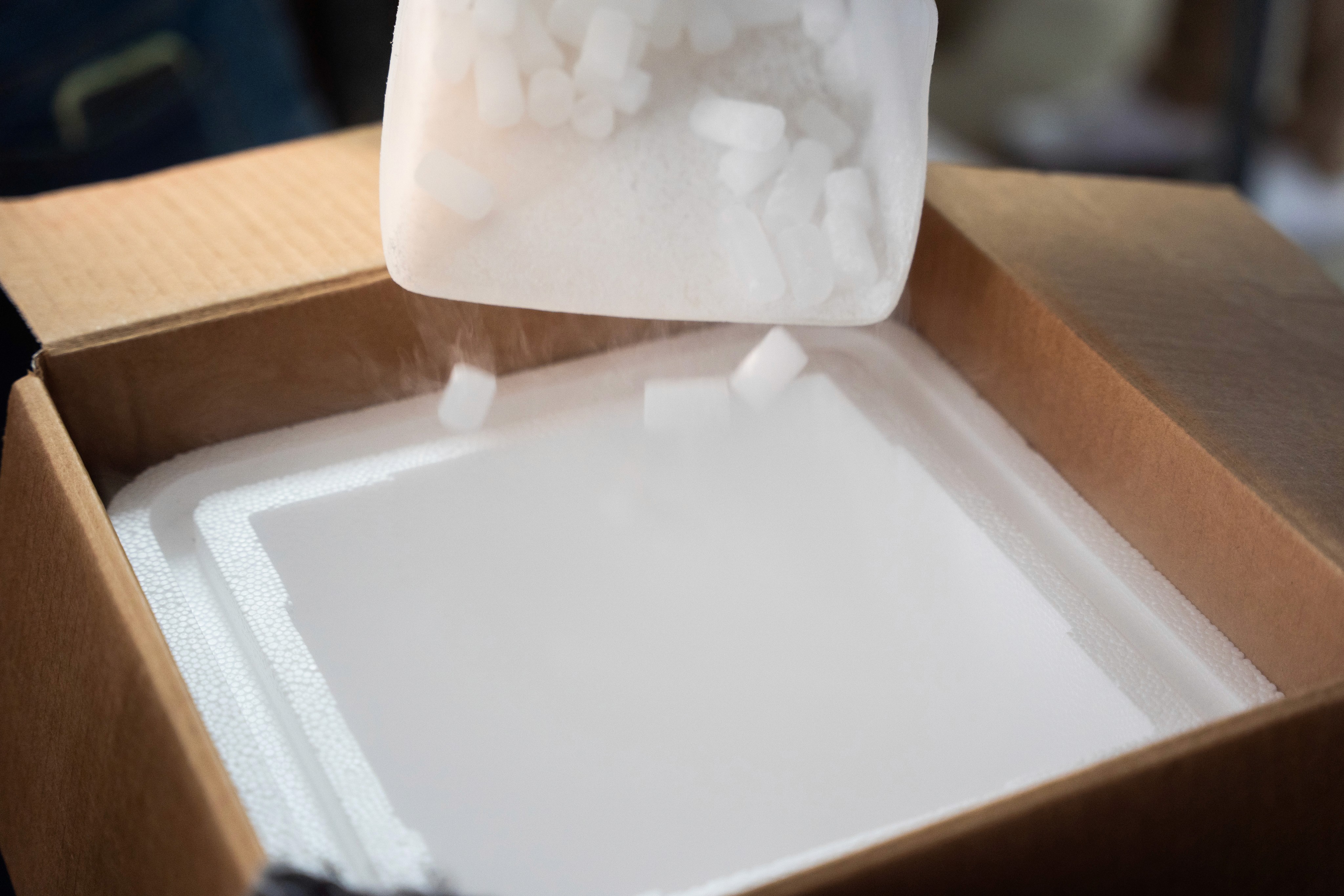
Dry ice sublimates at 5-10 pounds per 24-hour period in well-insulated containers
Pellet size significantly impacts sublimation speed—smaller pellets convert to gas faster than blocks
Container insulation quality and ambient temperature directly affect coolant longevity
Add buffer quantities for international shipments facing potential customs delays
Proper packaging must allow CO2 gas venting to prevent pressure buildup and container rupture
Calculating the Right Amount of Dry Ice for Safe Shipping
Shipping biological samples, pharmaceuticals, or perishable goods requires accurate dry ice calculations. Underestimate the amount, and your products reach unsafe temperatures mid-transit. Overestimate, and you waste budget on excess coolant while adding unnecessary weight charges. Understanding sublimation rates and planning factors ensures your temperature-controlled cargo arrives frozen throughout its journey.
What Makes Dry Ice Different from Regular Ice
Solid carbon dioxide transitions directly from solid to gas at -78.5°C (-109.3°F) through sublimation. Regular water ice melts into liquid at 0°C (32°F), creating moisture that damages packaging and payloads. Dry ice leaves no residue, making it ideal for shipping specimens and clinical materials that cannot tolerate water exposure.
This sublimation property creates both advantages and challenges. Your coolant provides consistent ultra-low temperatures without mess, but it continuously disappears throughout transit. One pound of dry ice generates 8.3 cubic feet of carbon dioxide gas, requiring ventilated packaging to prevent dangerous pressure accumulation.
Factors Affecting How Long Dry Ice Lasts When Shipping
There are several factors that influence how long dry ice will last in your shipping container:
Quantity Determines Duration: Larger dry ice masses sublimate more slowly than small amounts. Research shows packages containing less than 45 kilograms sublimate at approximately 2% per hour, while quantities exceeding 45 kilograms sublimate at roughly 1% per hour. More coolant provides extended protection, though aircraft regulations limit maximum quantities per package.
Insulation Quality Extends Performance: High-quality thermal shippers dramatically reduce sublimation rates compared to basic styrofoam coolers. Vacuum-insulated panel systems outperform expanded polystyrene containers, requiring less dry ice for equivalent transit times. Container integrity matters—reused packaging with micro-fractures allows faster heat transfer and accelerated coolant loss.
Ambient Temperature Accelerates Loss: Shipping during summer months or to tropical destinations increases sublimation rates significantly. Products traveling through hot tarmac conditions or warm cargo holds consume coolant faster than shipments in temperate climates. Plan additional reserves for routes crossing multiple climate zones.
Pellet Size Controls Sublimation Speed: Smaller pellets expose more surface area to ambient warmth, converting to gas faster than large blocks. Federal Aviation Administration studies confirm pelletized dry ice sublimates at notably higher rates than solid blocks under identical conditions. Choose block formats for maximum longevity or pellets when rapid cooling matters more than duration.
How Much Dry Ice Do You Need?
Mercury’s Recommendation: Dry ice sublimates at a rate of 5-10 lbs per 24 hours in a well-insulated cooler. We recommend 5-10 lbs of dry ice per day for items weighing up to 12.5 lbs. A shipment lasting 2 days requires at least 20 lbs of dry ice.
High-value shipments benefit from conservative calculations. Clinical trial samples, rare biological specimens, or materials supporting urgent medical procedures justify extra coolant investment. Temperature excursions cannot be reversed once they occur.
Safety Tips for Handling Dry Ice
Be careful when you handle dry ice. Here are some safety tips:
Wear gloves and use tongs to prevent frostbites.
Ensure proper ventilation when using dry ice in enclosed spaces to prevent CO2 buildup.
Don’t store dry ice in airtight containers, as the CO2 gas can lead to pressure buildup and container rupture.
Clearly mark your containers to indicate the presence of dry ice. Always keep dry ice out of the reach of children and pets.
Fact: Dry ice does not “melt” – instead it sublimates into gas
Dry Ice Replenishment Service is Always an Option
If you regularly ship specimen materials that require the contents to remain being frozen, consider using a specialty cold chain service that includes dry ice replenishment during customs clearance for peace of mind that temperature excursions won’t happen during unforeseen delays.
Protect your temperature-sensitive shipments with expert dry ice planning and monitoring. Contact Mercury today for customized cold chain solutions that deliver frozen products safely from origin to final destination.
Resources
Start shipping today!
Start your shipment now — no login required. Fast, secure, and guided by experts.