UN 1845 Class 9 - Dry Ice Packaging and Labeling
Specialty Cold-Chain
Life Science Shipping
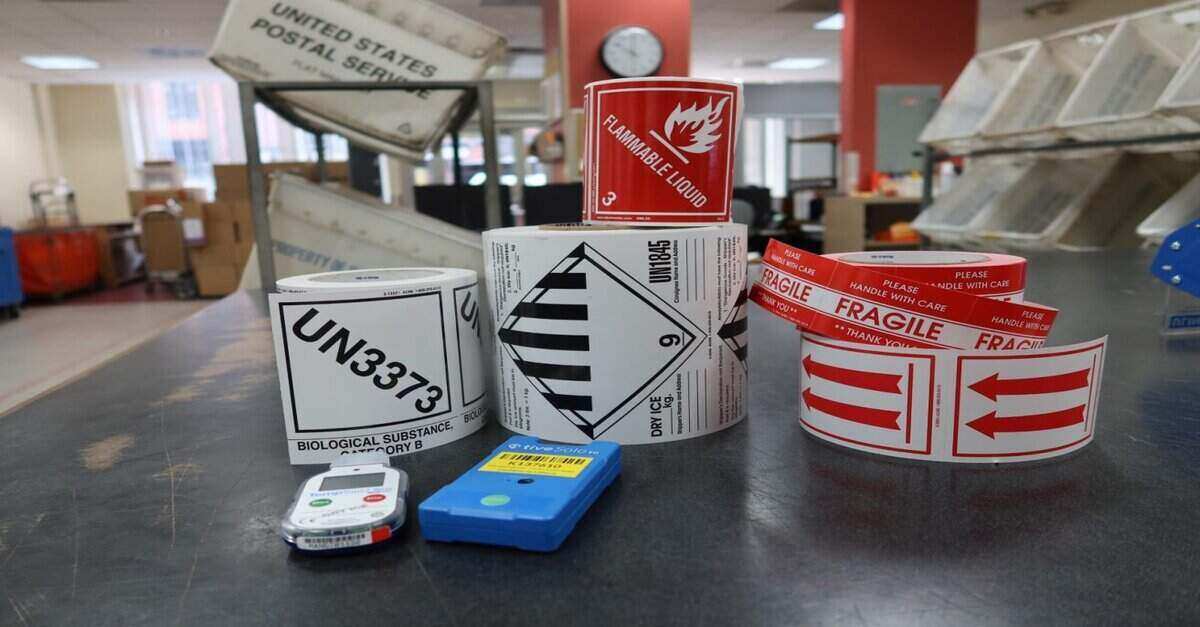
Dry ice is a regulated substance and must be packaged, marked and labeled appropriately to be transported under Department of Transportation (DOT) guidelines. See below for appropriate steps to ensure your package's compliance.
Introduction
To ensure the safe transportation of Class 9 UN 1845 with dry ice, it is vital to adhere to the applicable regulations set forth by the United Nations and the International Air Transport Association (IATA). These regulations provide specific guidelines for packaging, documentation, marking, and handling procedures.
Dry ice can be a very serious hazard in a small space that isn't well-ventilated. As dry ice melts, it turns into carbon dioxide gas. In a small space, this gas can build up. If enough carbon dioxide gas is present, a person can become unconscious, and in some cases, die. Therefore, dry ice is regulated for transport and must be packaged, marked and labeled appropriately.
Class 9 UN 1845 shipping with dry ice offers numerous benefits and is widely used in various industries. Some notable applications include:
Food Industry: Dry ice helps maintain the freshness and quality of perishable food items during transport, including seafood, fruits, and vegetables.
Pharmaceuticals: Many temperature-sensitive pharmaceuticals, vaccines, and biological samples require cold chain logistics, and dry ice plays a vital role in preserving their efficacy.
Laboratory and Research: Scientific experiments, clinical samples, and certain chemicals often need to be transported under controlled conditions, making dry ice an ideal choice.
To safely ship Class 9 UN 1845 goods with dry ice, several important regulatory requirements and safety measures must be followed:
Packaging: Proper packaging is crucial to prevent any leaks, spills, or damage during transit. The packaging should be robust, leak-proof, and capable of withstanding the extreme temperatures associated with dry ice.
Labeling and Documentation: All packages containing dry ice must be labeled appropriately to indicate the presence of hazardous material. In addition, proper documentation, including shipping papers, manifests, and safety data sheets, must accompany the shipment to provide crucial information to handlers and emergency personnel if required.
Ventilation: Adequate ventilation in transport vehicles or containers is essential to prevent the accumulation of carbon dioxide gas. This helps maintain a safe working environment for personnel involved in handling or unloading the shipment.
Training and Awareness: Individuals responsible for handling and transporting Class 9 UN 1845 shipments with dry ice must receive proper training on the potential hazards, safety procedures, and emergency response protocols. This ensures they are equipped with the knowledge and skills needed to mitigate risks effectively.
How to Prepare Shipments Containing Dry Ice
Package
Dry ice releases carbon dioxide gas which can build up enough pressure to rupture the packaging. You must ensure the packaging you use allows the release of this pressure to prevent rupturing the package. For example, do not use steel drums or jerricans as outer packaging, and do not place dry ice within sealed plastic bags.
Use good quality fiberboard (corrugated cardboard), plastic or wooden boxes as the outer box. Styrofoam must not be used as an outer packaging.
A layer of Styrofoam within a box works well as insulation. Ensure the Styrofoam IS NOT sealed to be airtight.
The maximum amount of dry ice per package varies based on destination.
Marking
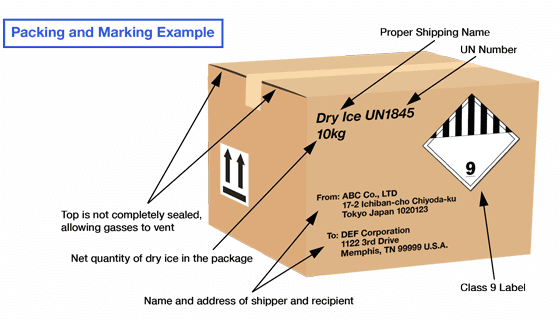
The following package markings are required:
Dry Ice (or Carbon Dioxide Solid) Note: The Proper Shipping Name, namely Dry Ice (or Carbon Dioxide Solid) must be on the same surface of the package as the hazard label or Class 9 label, when package dimensions are adequate.
UN 1845
The net quantity of dry ice in the package in kilograms
The name and address of both the shipper and recipient must be durably marked. This information can be marked on the package itself, or you can mark the shipper and recipient in the fields provided on the Dry Ice Label
Labeling
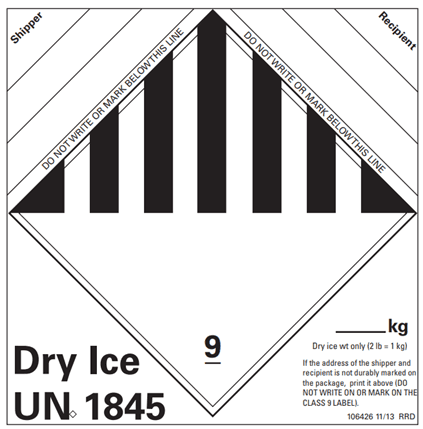
A Class 9 label is required. Do NOT write inside the diamond border of the label.
You are required to note the amount of dry ice either directly on the box or in the spot provided on the label. (Bottom-right corner of the label)
You are required to note the name and address of the shipper and recipient on the box or in the specified area of the label.
Ship with dry ice through Mercury
Mercury provides specialty cold chain shipping with validated thermal shippers, pre-conditioned dry ice, and Class 9 UN 1845 compliance documentation on every shipment. If you need a logistics partner that handles packaging, labeling, and monitoring end-to-end, contact Mercury's team.
Start shipping today!
Start your shipment now — no login required. Fast, secure, and guided by experts.
From our glossary & FAQ

What Is a Pro Forma Invoice?
Learn what a pro forma invoice is, what it includes, and how it supports the sales process. Discover how to create a proforma invoice for smooth transactions.
Read more

What Is an Air Waybill (AWB)?
An air waybill, or consignment note, is a contract among the shipper, airline, and recipient, acting as a cargo receipt and outlining the transportation terms.
Read more

DDP vs. DAP Incoterms
DDU (Delivered Duty Unpaid) and DDP (Delivered Duty Paid) are international trade terms that indicate whether the seller or the buyer is responsible for paying customs duties and taxes.
Read more

Pharma Cold Chain Under Pressure
Pharma cold chain demand is rising while skilled labor and lane capacity stay tight. See what is driving the strain and how shippers can respond.
Read more

Emergency Medical Courier for Time-Sensitive Shipments
Mercury's emergency medical courier service moves surgical implants, specimens, and urgent pharma shipments on tight deadlines.
Read more

Business Email Compromise and Cargo Theft
Business email compromise and cargo theft now share one entry point. The controls life science shippers need to stop shipment fraud.