Phase Change Materials (PCM) Shipping
Specialty Cold-Chain
Supplies
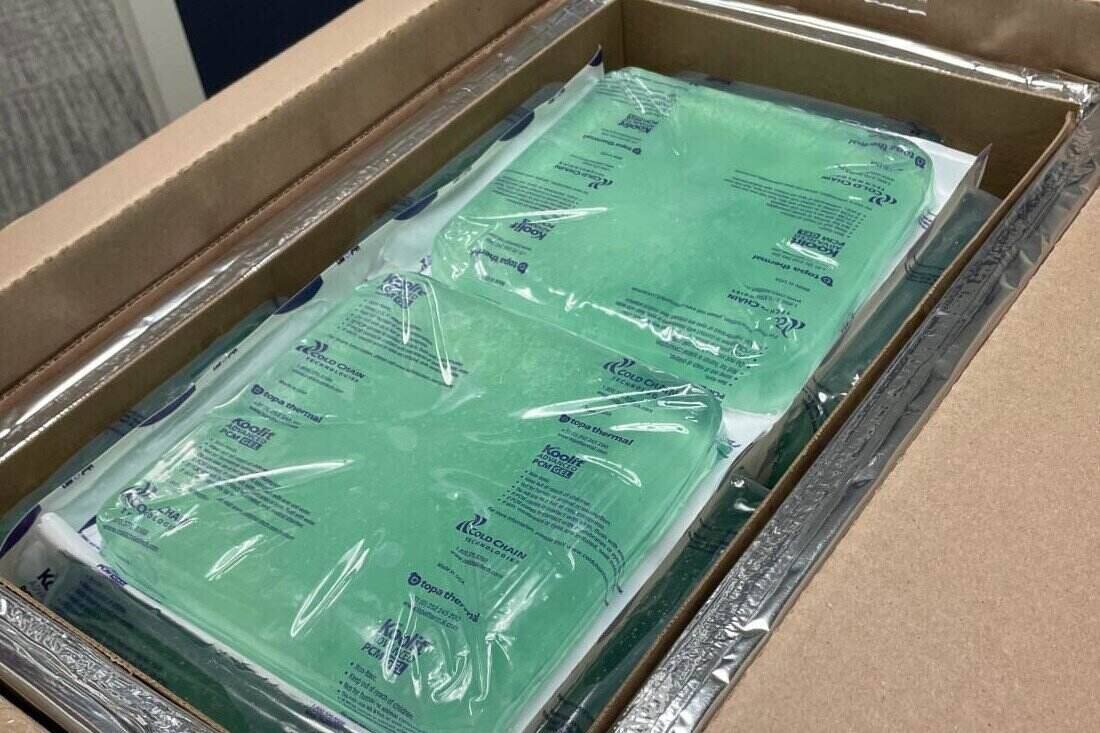
PCMs change phases at a specific temperature and are often used to keep substances cold but not frozen
For example, if you have a substance that needs to remain at exactly 3°C or below, there is a PCM specifically formulated to meet your needs.
Shipping with Phase Change Materials
Advantages:
Unlike dry ice or wet ice, PCMs can be refrozen and reused
PCMs maintain a very specific temperature range that is often cold, but not frozen
PCMs work in both directions keeping your substance from getting too cold or too hot
Disadvantages:
PCMs need to be “pre-conditioned”, which is a very specific process that can take hours to freeze or refrigerate them to the right temperature
Adding more PCMs doesn’t linearly add onto the amount of time a package can be shipped/stored. If 4 gel packs are needed to maintain a certain temperature for 3 days while shipping, 8 gel packs would not give you 6 days with the same result
Dry ice is readily available and logistically easier for a recipient to ship with versus the time and resources required to re-freeze a PCM
Shipping with Dry and Wet Ice

At a specific temperature, every substance undergoes a change in phase. For instance, water changes from a solid to a liquid state when its temperature reaches 0°C (32 F).
When a substance reaches its phase change temperature, it absorbs a significant amount of heat at a constant temperature until it completely melts. This property makes ice an effective coolant for anything that needs to be kept at or below 0°C, as long as the packaging can contain the liquid water.
Another substance that changes phase at a specific temperature is solid carbon dioxide, commonly known as dry ice. It changes phase at a temperature of -78°C and is used to keep substances frozen at or below -78°C. An added advantage of dry ice is that it sublimates into a gas, leaving no liquid behind that could potentially harm the substance or its packaging.
Each shipment is unique and Mercury’s expert team provides a customized solution to meet your specific needs. We also sell cold chain supplies such as PCMs, dry ice and validated thermal shippers.
Start shipping today!
Start your shipment now — no login required. Fast, secure, and guided by experts.
From our glossary & FAQ

What Is a Pro Forma Invoice?
Learn what a pro forma invoice is, what it includes, and how it supports the sales process. Discover how to create a proforma invoice for smooth transactions.
Read more

What Is an Air Waybill (AWB)?
An air waybill, or consignment note, is a contract among the shipper, airline, and recipient, acting as a cargo receipt and outlining the transportation terms.
Read more
DDP vs. DAP Incoterms
DDU (Delivered Duty Unpaid) and DDP (Delivered Duty Paid) are international trade terms that indicate whether the seller or the buyer is responsible for paying customs duties and taxes.
Read more

Pharma Cold Chain Under Pressure
Pharma cold chain demand is rising while skilled labor and lane capacity stay tight. See what is driving the strain and how shippers can respond.
Read more

Emergency Medical Courier for Time-Sensitive Shipments
Mercury's emergency medical courier service moves surgical implants, specimens, and urgent pharma shipments on tight deadlines.
Read more

Business Email Compromise and Cargo Theft
Business email compromise and cargo theft now share one entry point. The controls life science shippers need to stop shipment fraud.