Cargo Aircraft Only (CAO) Label
Freight
Parcel
Specialty Cold-Chain
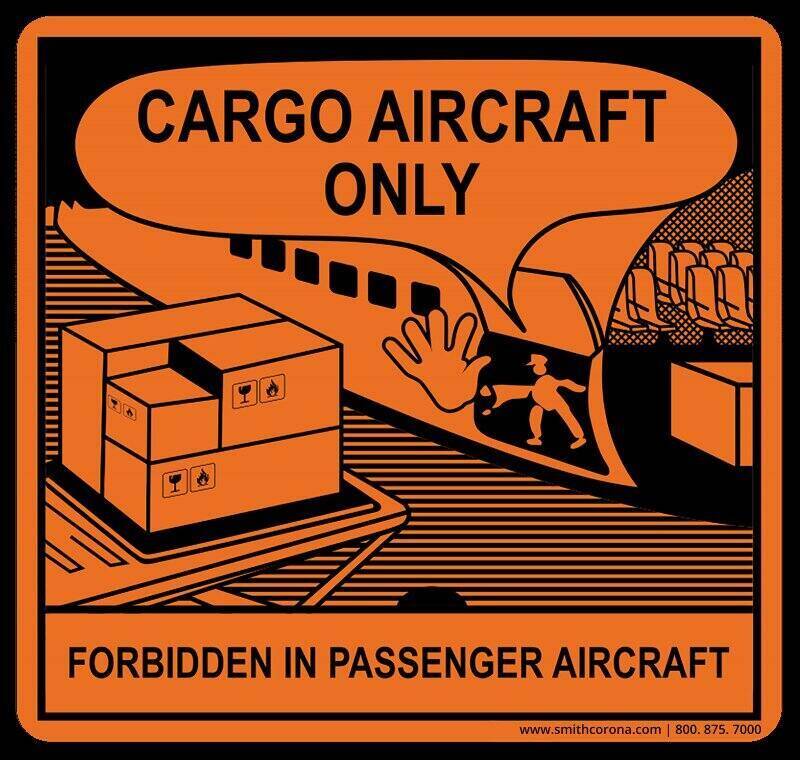
The Cargo Aircraft Only (CAO) label must be included on every shipment of hazardous goods transported via cargo aircraft. It is a clear warning symbol displayed on packages traveling as air cargo that contain hazardous materials.
The label's primary function is to clearly indicate that the packaged items to which it is affixed cannot be transported on regular passenger airlines, but only on cargo aircraft. The CAO label is unique in terms of color (bright orange) and design so that it can be easily recognized by airport and cargo handling staff with the words 'Cargo Aircraft Only' prominently displayed and the text ‘Forbidden in Passenger Aircraft’ at the bottom of the label.
The CAO label is part of the International Air Transport Association's (IATA) Dangerous Goods Regulations (DGR) with Section 4.2 holding vital instructions on the proper procedures for preparing your shipment containing hazardous materials for air transportation.
Legal Obligation
Using the CAO label correctly is not just a good practice, but also a legal obligation. Shippers who fail to comply with the proper use of the label may face penalties from regulatory bodies. These penalties can range from fines to the suspension of their shipping privileges. This highlights the importance of ensuring that dangerous goods are labeled correctly for transportation.
Shipping Batteries
One particular case where the CAO label and regulations around it become significantly important is with the transportation of lithium batteries by aircraft.
How to Buy CAO Labels
CAO labels can be purchased from various online retailers.
Start shipping today!
Start your shipment now — no login required. Fast, secure, and guided by experts.
From our glossary & FAQ

What Is a Pro Forma Invoice?
Learn what a pro forma invoice is, what it includes, and how it supports the sales process. Discover how to create a proforma invoice for smooth transactions.
Read more

What Is an Air Waybill (AWB)?
An air waybill, or consignment note, is a contract among the shipper, airline, and recipient, acting as a cargo receipt and outlining the transportation terms.
Read more

DDP vs. DAP Incoterms
DDU (Delivered Duty Unpaid) and DDP (Delivered Duty Paid) are international trade terms that indicate whether the seller or the buyer is responsible for paying customs duties and taxes.
Read more

Pharma Cold Chain Under Pressure
Pharma cold chain demand is rising while skilled labor and lane capacity stay tight. See what is driving the strain and how shippers can respond.
Read more

Emergency Medical Courier for Time-Sensitive Shipments
Mercury's emergency medical courier service moves surgical implants, specimens, and urgent pharma shipments on tight deadlines.
Read more

Business Email Compromise and Cargo Theft
Business email compromise and cargo theft now share one entry point. The controls life science shippers need to stop shipment fraud.