What is a Bill of Lading?
Customs Brokerage
Parcel
Specialty Cold-Chain

What You Need to Know About a Bill of Lading
A Bill of Lading (B/L or BOL) is a vital document that ensures the smooth flow of goods across borders. By understanding the intricacies of the BOL, businesses can avoid costly mistakes and legal disputes. A Bill of Lading serves three main purposes in international trade transactions:
A contract between the shipper and carrier
A receipt for the goods transported
A document of title, transferring ownership from shipper to consignee
By fulfilling these roles, the BOL ensures the secure transport and delivery of goods, as well as providing proof of shipment and establishing terms for the release of goods.
Essential Information for a Bill of Lading
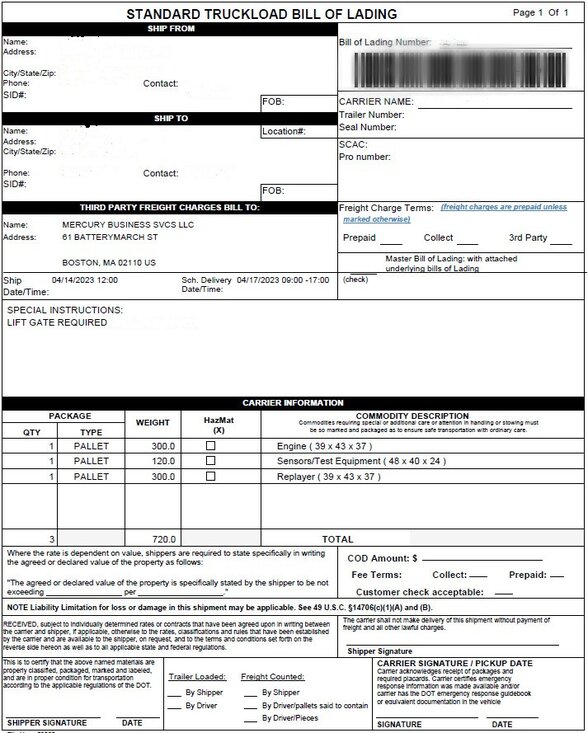
A BOL must include the following information:
Names and addresses of the shipper, carrier, and consignee
Description of the goods being shipped
Weight and quantity of the goods
Shipping method
Special instructions, if any
Additionally, the BOL must be signed by the carrier or their representative, confirming receipt of the goods and acceptance of responsibility for their delivery.
Best Practices for Managing Bills of Lading
To maximize the benefits of using BOLs and avoid potential pitfalls, consider the following best practices:
Double-check all information on the BOL for accuracy
Ensure proper handling and storage of the BOL during transport
Keep copies of the BOL for record-keeping purposes
Train employees in BOL requirements and handling procedures
By mastering the art of the Bill of Lading, businesses can optimize their international trade operations and safeguard their interests in an increasingly globalized marketplace.
Start shipping today!
Start your shipment now — no login required. Fast, secure, and guided by experts.
From our glossary & FAQ

What Is a Pro Forma Invoice?
Learn what a pro forma invoice is, what it includes, and how it supports the sales process. Discover how to create a proforma invoice for smooth transactions.
Read more

What Is an Air Waybill (AWB)?
An air waybill, or consignment note, is a contract among the shipper, airline, and recipient, acting as a cargo receipt and outlining the transportation terms.
Read more
DDP vs. DAP Incoterms
DDU (Delivered Duty Unpaid) and DDP (Delivered Duty Paid) are international trade terms that indicate whether the seller or the buyer is responsible for paying customs duties and taxes.
Read more

Pharma Cold Chain Under Pressure
Pharma cold chain demand is rising while skilled labor and lane capacity stay tight. See what is driving the strain and how shippers can respond.
Read more

Emergency Medical Courier for Time-Sensitive Shipments
Mercury's emergency medical courier service moves surgical implants, specimens, and urgent pharma shipments on tight deadlines.
Read more

Business Email Compromise and Cargo Theft
Business email compromise and cargo theft now share one entry point. The controls life science shippers need to stop shipment fraud.