Medical Robotics Logistics: EndoQuest Story
General
Medical Device
Interview with Adam Peters - How EndoQuest Robotics Partners with Mercury to Deliver Scar-Free Surgery
The future of surgery is happening now without scars, without large incisions, and with technology that seemed impossible just years ago. EndoQuest Robotics stands at the forefront of this revolution, developing flexible robotic surgical systems that enable procedures through the body's natural orifices. But groundbreaking medical technology means nothing if it can't reach the operating rooms where patients need it.
As EndoQuest began their IDE Clinical Trial and deployed their sophisticated robotic systems to leading hospitals including Cleveland Clinic, Mayo Clinic, and HCA, a critical challenge emerged: how do you transport highly valuable and complex medical equipment across the country while meeting strict hospital protocols, regulatory requirements, and zero-error expectations? Adam Peters, Senior Materials Manager at EndoQuest Robotics, walked us through their partnership with Mercury and how strategic logistics support enables medical innovation to reach patients faster.
For people who may not know EndoQuest, how do you describe what you're building?
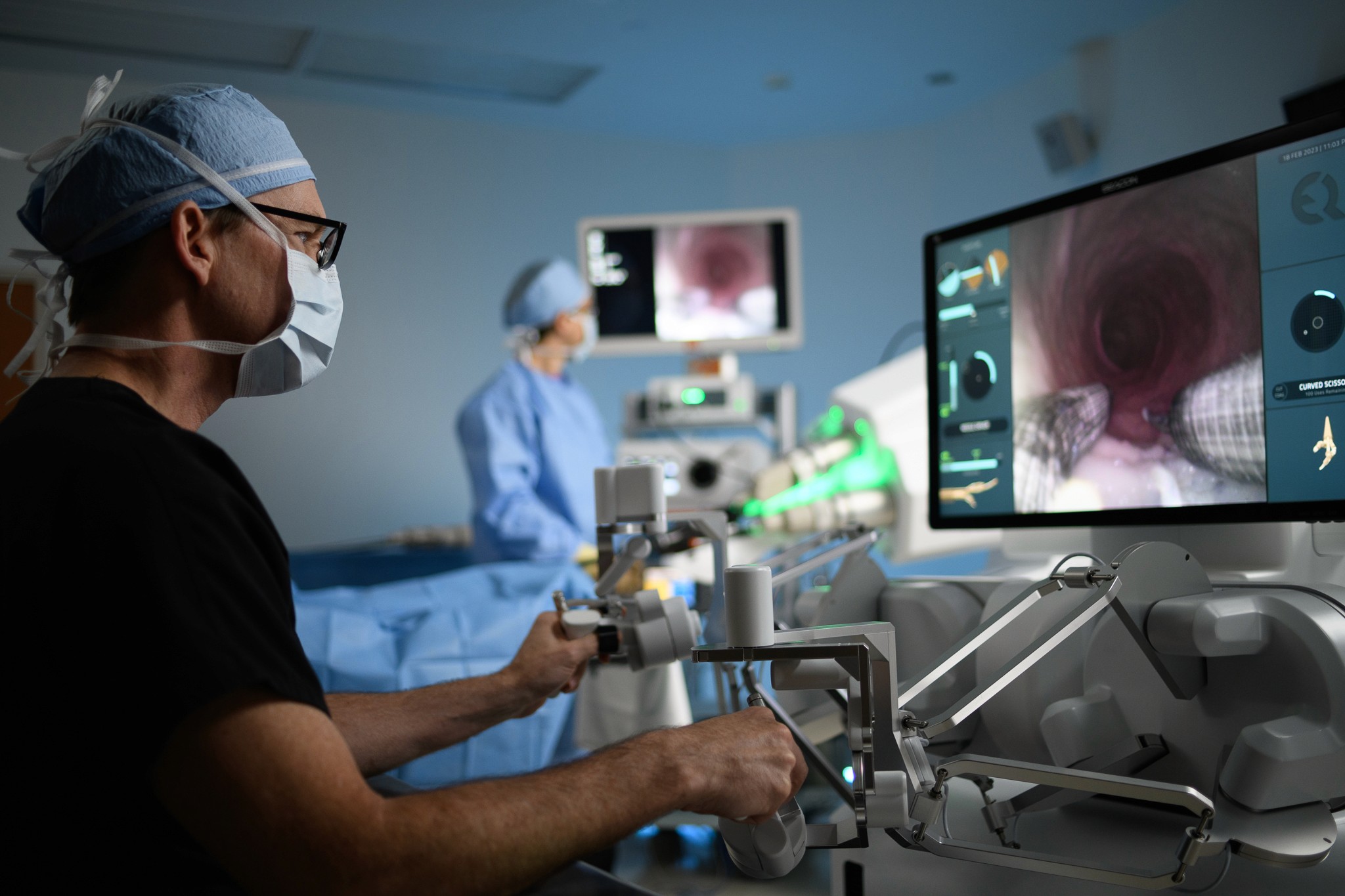
EndoQuest Robotics is developing a Flexible Robotic Surgical System that enables surgery through the body's natural orifices, allowing physicians to provide truly scar-free surgery for the first time. This is in contrast to conventional open, laparoscopic, or robotic surgery, which require external incisions through healthy tissue to access the site of surgical intervention.
What were the big milestones for EndoQuest over the last year as you moved your robotics from the lab to the hospital system?
We were granted approval from the FDA in November 2024 to commence our PARADIGM clinical trial for endoluminal robotic colorectal surgery at five leading US hospitals. Following that, we've deployed and installed our robotic system at those sites and have performed successful clinical procedures. It's been an incredible journey watching our technology move from development to actual patient care.
When did you first get connected with the Mercury team, and what made you decide to give us a try?
We connected with Mercury in early 2024 as we anticipated needing a strong logistics partner to thoughtfully support the rollout of our robotic systems to our clinical sites. I was impressed by their experience in healthcare logistics and their genuine engagement with understanding our specific needs. Mercury demonstrated the know-how and customer-focused approach we were looking for to support this critical and sensitive process.
As you started shipping into clinical sites like Cleveland Clinic, Mayo Clinic, and HCA, what logistics challenges did you face?
To ensure safe delivery, EndoQuest has strict requirements for the carriers that transport our products to the clinical sites. Additionally, each clinical site has different receiving parameters, and their different geographical locations meant that we also needed local storage options for our crates and critical shipping supplies. Coordinating all of these moving parts while maintaining our quality standards was a significant challenge.
Can you share a specific shipment where Mercury's white-glove freight or communication really made a difference for your team?
Absolutely. As we prepared for our clinical trial, getting our principal investigators hands-on time with the system in practical lab applications was critical. We needed to schedule training time with each of our five PIs and align their busy schedules with available time slots at the preclinical lab. Mercury was instrumental in safely transporting our system to the labs, working closely with EndoQuest personnel to load and unload within strict time constraints and complex delivery conditions, and ensuring the system was in place and ready for functional training when each PI arrived. This process was repeated multiple times and Mercury executed flawlessly each time. That kind of reliability, when it matters most, is exactly what we needed.
When you think about documentation, regulatory requirements, and customer requirements for moving your devices, how does Mercury support you in getting that right?
EndoQuest has a division in South Korea and frequently has intercompany shipments that require clearance by international customs agencies. Mercury has helped make sure that clearance is proactively received so the shipments can flow uninterrupted and on schedule.
How do you and the Mercury team collaborate on packaging choices and carrier selection for sensitive robotic equipment?
Packaging is already part of our finished goods, but we have strict requirements for the carriers, which include air-ride equipped trucks, liftgates, dedicated trucking, and no transfers. Mercury is always able to find carriers that meet these requirements and can deliver on time.
What have you valued most about working with Mercury?
Mercury's myriad of support services and solutions has enabled us to work with one strategic partner that knows our business, our demands, and is engaged in our future.
As you plan the next wave of clinical trial sites, how do you see your partnership with Mercury evolving to support that growth?
As EndoQuest advances into our next round of clinical trials and commercialization, we know Mercury has the shipping and warehousing solutions we need to ramp up our operations and delivery for our future customers in the US and globally.
Why This Partnership Matters
The conversation with Adam Peters reveals a fundamental truth about medical device innovation: breakthrough technology requires breakthrough logistics. When highly valuable and complex medical equipment must arrive at hospital loading docks within precise time windows, when pre-clinical training with state-of-the-art technology requires flawless execution, and when international customs clearance can't cause delays, standard shipping simply won't work.
EndoQuest chose Mercury not just for logistics capabilities, but for a strategic partnership. A single point of contact who understands their business. Proactive problem-solving before issues impact clinical timelines. White-glove execution when the stakes are highest. And scalable infrastructure ready to support commercialization as EndoQuest brings scar-free surgery to patients worldwide.
This is how medical innovation reaches the operating room. Brilliant surgical technology combined with logistics expertise that ensures every robotic system arrives safely, on time, and ready to transform patient outcomes. As EndoQuest continues to pioneer the future of surgery, Mercury will be there, handling the complexity so they can focus on what matters most: eliminating scars and advancing healthcare.
Is your life sciences company navigating the transition from clinical trials to commercial scale? Contact Mercury today to learn how our specialized logistics support enables medical innovators like EndoQuest to focus on breakthrough technology rather than shipping challenges.
Start shipping today!
Start your shipment now — no login required. Fast, secure, and guided by experts.