HS Code 3001: Glands, Organs and Heparin
Key takeaways
HS code 3001 covers dried glands and organs for organo-therapeutic use, extracts of glands, organs or their secretions, heparin and its salts, and other human or animal therapeutic substances not covered elsewhere.
Extracts of glands, organs or their secretions go to subheading 3001.20, while dried glands, heparin and the residual substances go to 3001.90, and both lines are duty free under the US general rate.
Fresh or frozen glands kept for pharmaceutical use belong in heading 0510, edible offal belongs in Chapter 2, and blood products, immunological products and cell cultures belong in heading 3002.
The tariff code does not decide permits: USDA APHIS looks at species, origin, processing and intended use, CDC regulates materials that may carry human pathogens, and FDA reviews every FDA-regulated entry.
Shipping these materials safely means confirming classification and permits before booking, matching packaging to the material's hazard and temperature needs, and sending documents that match the invoice.
HS code 3001 is the Harmonized System heading for glands and other organs used for organo-therapeutic purposes, their extracts, heparin and its salts, and other human or animal substances prepared for therapeutic or prophylactic use that are not classified anywhere else. If you import or export porcine heparin, dried thyroid or pancreatic material, or an organ extract destined for a drug manufacturer, HS 3001 is usually where classification starts. It is a narrow heading, and the most common mistakes come from what sits just outside it: fresh glands, edible offal, blood products and finished medicines.
This guide explains what the heading covers, how its two subheadings divide products, how it differs from heading 3002, and which US agencies can require a permit when animal-derived therapeutic substances are imported. If you need the general method for finding any code, start with our guide on how to find an HS code for international shipping. For an overview of other chapters, see our list of HS codes for healthcare and life sciences.
What is HS code 3001?
HS code 3001 is a four-digit heading in Chapter 30 (pharmaceutical products) of the Harmonized System maintained by the World Customs Organization. The official heading text in the WCO HS 2022 nomenclature for Chapter 30 covers four groups of goods:
Glands and other organs for organo-therapeutic uses, dried, whether or not powdered.
Extracts of glands or other organs, or of their secretions, for organo-therapeutic uses.
Heparin and its salts.
Other human or animal substances prepared for therapeutic or prophylactic uses, not elsewhere specified or included.
"Organo-therapeutic" means the material is used for treatment because of what the organ or gland contains, for example a hormone, an enzyme or an anticoagulant. The heading therefore describes material that has already been prepared for pharmaceutical use. That is the key correction to a common misunderstanding, which our earlier version of this article also repeated: HS 3001 is not a code for animal organs in general, and it does not cover liver, kidneys or other organs traded as food. Edible offal is classified in Chapter 2. Glands and other animal products used to make pharmaceuticals but shipped fresh, chilled, frozen or otherwise provisionally preserved belong in heading 0510 in Chapter 5. Only once the material is dried, extracted or otherwise prepared does it move into the glands and organs HS code at 3001.
At six digits the heading has two subheadings, 3001.20 and 3001.90. Countries add further digits for their own tariffs and statistics, so a US entry, an EU declaration and an Indian bill of entry will all start with the same six digits and then diverge.
How the US tariff breaks down HS 3001
The table below shows the US Harmonized Tariff Schedule (HTSUS) lines for the heading as published by the US International Trade Commission, checked on 29 October 2026. The "general" column is the normal trade relations rate. Column 2 applies only to a small group of countries.
HTSUS number | Description | Unit | General duty | Column 2 duty |
|---|---|---|---|---|
3001.20.00.00 | Extracts of glands or other organs or of their secretions | kg | Free | 10% |
3001.90.01.10 | Other: liver | kg | Free | Free |
3001.90.01.50 | Other: other | kg | Free | Free |
3001.90.01.65 | Other: heparin | kg | Free | Free |
3001.90.01.95 | Other: other | kg | Free | Free |
A free general rate does not mean an entry costs nothing. Additional duties under trade actions can apply on top of the HTSUS rate depending on country of origin, and processing fees still apply. The "liver" line under 3001.90 refers to dried liver prepared for therapeutic use, not to liver sold as food. Because extra duty layers have changed often in recent years, confirm the full duty picture for your origin country and entry date with your licensed customs broker before you quote a landed cost.
HSN code 3001 and the Indian tariff
Searches for "3001 HSN code" or "HSN code 3001" usually come from India, where the Harmonized System of Nomenclature is commonly shortened to HSN. The first six digits are the same international HS subheadings described above. India's customs tariff then extends them to eight digits for its own duty and GST purposes, with separate lines for items such as heparin and its salts. If you are exporting from India to the United States, the US importer still classifies the goods under the HTSUS at entry, so the Indian eight-digit code on the shipper's invoice is a helpful reference, not the US classification. Confirm Indian eight-digit lines and rates on the official CBIC tariff or ICEGATE, not on third-party lookup sites.
What products are classified under HS 3001.20?
HS 3001.20 covers extracts of glands or other organs, or of their secretions, prepared for organo-therapeutic use. In practice this is where you look when the product has been extracted rather than simply dried and ground. Searches for HS code 300120 are the same subheading written without the dot.
Typical examples are concentrated extracts of animal glands or organs, or of their secretions, supplied to drug manufacturers for therapeutic use. Whether a specific product belongs here depends on what was done to it. Three checks help:
Is it an extract or the dried organ itself? A dried, powdered gland stays under 3001.90. A product obtained by extraction from the gland goes to 3001.20.
Is it still an extract, or has it become a defined chemical? Isolated hormones are named in heading 2937 in Chapter 29, and enzymes in heading 3507 in Chapter 35, so a product purified to that point can leave Chapter 30.
Is it mixed and put up as a medicine? Once an extract is formulated and put up in measured doses or retail packs, heading 3004 usually applies instead.
Heparin is not classified under 3001.20 even though it comes from animal tissue. The heading names heparin and its salts separately, and the US tariff gives heparin its own statistical line under 3001.90. So the correct heparin HS code at six digits is 3001.90, and in the US the full number is 3001.90.01.65. Crude heparin is typically extracted from porcine intestinal mucosa, which is one reason FDA expects manufacturers to confirm the species origin of the material, as set out in its guidance on monitoring crude heparin for quality.
When a product sits on the line between two subheadings, a CBP binding ruling under 19 CFR part 177 gives you a classification you can rely on for future entries. Request one before regular shipments start rather than after a dispute at the border.
What is the difference between HS 3001 and 3002?
The short answer to 3001 vs 3002 is that heading 3002 covers blood and the products of the immune system and of living cells, while HS 3001 covers prepared glands and organs, their extracts, heparin and residual human or animal therapeutic substances. Heading 3002 includes human blood, animal blood prepared for therapeutic, prophylactic or diagnostic uses, antisera and other blood fractions, immunological products such as monoclonal antibodies, vaccines, toxins, cultures of micro-organisms and cell cultures. Because 3001 ends with "not elsewhere specified or included," any product that fits 3002 goes there first.
The comparison below covers the headings most often confused for these materials.
Product | Usual heading | Why |
|---|---|---|
Dried, powdered thyroid gland for drug manufacture | 3001.90 | Dried gland prepared for organo-therapeutic use |
Extract of pancreas or another organ for therapeutic use | 3001.20 | Extract of an organ |
Bulk heparin sodium | 3001.90 | Heparin and its salts are named in heading 3001 |
Heparin injection in vials or prefilled syringes | 3004 | Medicament put up in measured doses |
Frozen glands awaiting processing | 0510 | Provisionally preserved animal material |
Human plasma, serum or antisera | 3002 | Blood and blood fractions |
Monoclonal antibodies, vaccines, cell lines | 3002 | Immunological products and cell cultures |
Treat the table as a starting point, not a ruling. The exact wording on the invoice, the processing history and the form in which the goods are presented decide the code. For the 3002 side, including cell lines and blood products, see our guide to HS 3002 blood products and cell lines. For finished medicines in headings 3003 and 3004, read our article on HS 3003 and HS 3004 medicaments.
Do animal-derived materials under HS 3001 need a USDA permit?
Sometimes. The HS code does not decide it. USDA APHIS Veterinary Services decides based on the animal species, the country of origin and its disease status, how the material was processed and what it will be used for. Some animal-derived therapeutic substances need a VS import permit, some enter without one if the right supporting statement is presented, and some are restricted entirely from certain countries.
The rules sit mainly in 9 CFR part 95, which covers animal byproducts offered for entry, alongside part 94 on restricted imports from regions affected by diseases such as foot-and-mouth disease or BSE, and part 122 for organisms and vectors. APHIS takes applications for products, organisms and vectors on form VS 16-3 through its eFile system, as listed on its animal health permits page.
APHIS also publishes guidelines for animal products that do not require an import permit. Among them, FDA-approved pharmaceuticals in bulk or final-use packaging and chemically synthesized materials with no animal exposure can generally enter without a VS permit, provided the recommended statement on the producer's letterhead is presented. These goods are still reviewed at the port of entry, and APHIS asks that the documents travel separately for CBP review rather than inside the package. Material from ruminants or swine that is not yet an approved finished drug, such as crude heparin or a bovine organ extract, is the kind of shipment where you should expect APHIS to ask for a permit or detailed supporting documents, so check before booking.
Two other agencies can be involved in animal-derived therapeutic substances import:
CDC. The CDC Import Permit Program regulates infectious biological materials that could cause disease in humans, under 42 CFR 71.54. A dried, processed extract is rarely in scope, but raw human-derived material or material that could carry a human pathogen may be. Our guide to importing human-derived materials into the United States covers that side.
FDA. CBP refers all FDA-regulated products to FDA for review, and FDA decides whether they are admissible, as its import basics page explains. An API such as heparin is a drug component and must meet the same standards as domestic product.
Protected species add another layer. If the gland or organ comes from a CITES-listed animal, a CITES document is needed in addition to any veterinary permit. Read more in our article on CITES permits and declarations, and see our glossary entry on animal specimen imports for related research material. For a wider view of permits across agencies, see our guide to import permits for US trade compliance.
How do you ship glands and organ extracts internationally?
You ship glands and organ extracts internationally by settling classification and permits first, then packing the material for its hazard and temperature profile and sending documents that describe it exactly. Most delays with HS 3001 goods come from a vague description or a missing species statement, not from the transport itself. A practical sequence looks like this:
Confirm the code and the description. Write the invoice description in the terms the tariff uses: what the material is, the source species, whether it is dried, extracted or purified, and its intended use. "Biological sample" or "pharmaceutical material" is not enough.
Check permits on both ends. Confirm export requirements in the origin country and import permits in the destination. For the US, decide whether a USDA VS permit, a CDC permit or neither applies, and whether FDA will review the entry. Permits often take weeks, so apply before booking.
Gather origin documents. Ask the producer for a certificate of analysis, a species of origin statement and, where APHIS requires it, a veterinary health certificate issued in the origin country. Our article on veterinary certificates for animal shipments explains what those usually contain.
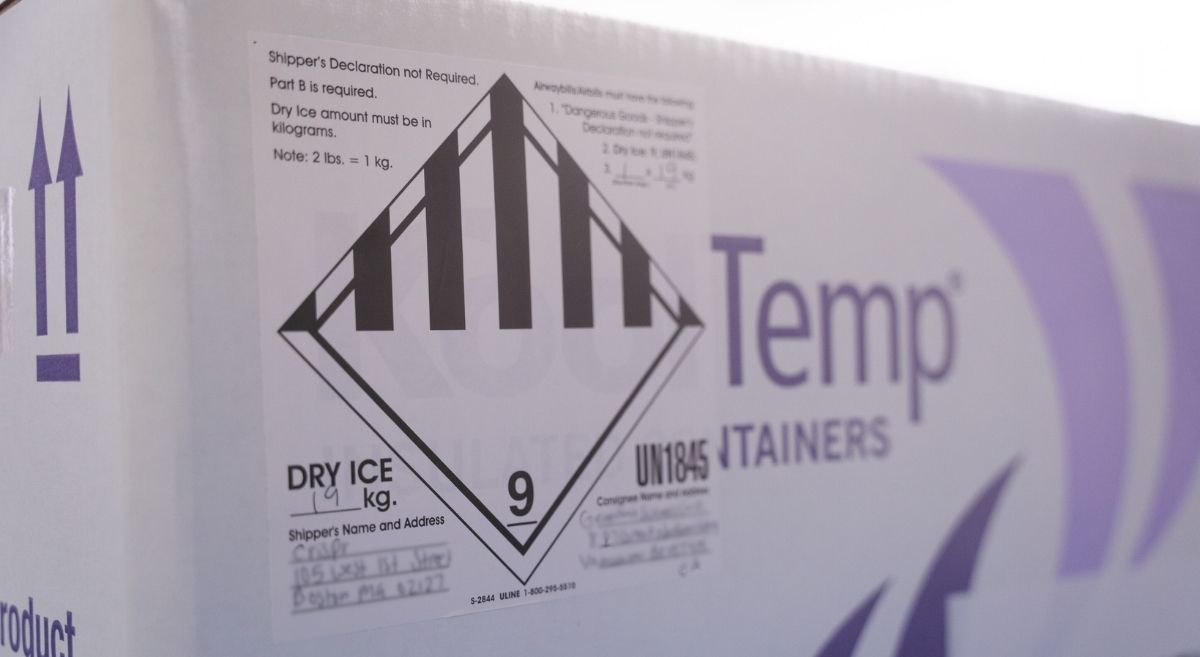
Classify the shipment for transport. Most dried extracts and bulk heparin are not dangerous goods. Material that could contain pathogens may need to travel as a biological substance under the IATA rules. If the shipment uses dry ice, that is regulated in its own right. See our guide to classifying biological shipments safely and our dry ice shipping instructions.
Match packaging to stability data. Use the storage condition stated on the certificate of analysis or the product specification, whether ambient, refrigerated or frozen, and choose packaging qualified for the full transit time plus a buffer for customs holds. Add a temperature logger when the specification has a defined range.
Book a route that limits handling. Fewer transfers mean fewer chances for delay and temperature exposure. Avoid arrivals before weekends or holidays at the destination when a regulatory inspection is likely.
Send documents ahead. Share the invoice, permits, statements and air waybill with the broker before the shipment departs so the entry can be prepared and any agency questions answered while the goods are in the air.
Keep a file for each lane with the code you used, the permit number and expiry, and the statements the producer supplied. Repeat shipments then clear faster because the description and documents stay consistent.
Common mistakes with HS 3001 shipments
The same few errors appear again and again. Classifying fresh or frozen glands under 3001 instead of 0510, which changes both the code and the veterinary review. Declaring a finished heparin injection under 3001.90 instead of 3004. Leaving the species off the invoice, which stops the APHIS review. Assuming a free duty rate means no other charges or agencies apply. Packing documents inside the box, where CBP and APHIS cannot see them. Each of these is easy to prevent at the booking stage and slow to fix at the port.
Getting HS 3001 shipments right
HS 3001 is a small heading, but it sits at the meeting point of tariff classification, veterinary controls and drug regulation. Getting it right means checking the form of the product against the heading text, confirming permits with USDA APHIS, CDC and FDA as relevant, and keeping descriptions consistent from the producer's invoice to the entry. Mercury's licensed customs brokerage team handles US entry filing, tariff classification for pharmaceutical materials and documentation before shipments move, which helps keep these materials from waiting at the border. For how USDA and FDA rules interact more broadly, see our overview of FDA and USDA regulations in bio-med logistics.