Shipping Protocols for Lithium-Ion Batteries
Customs Brokerage
Dangerous Goods
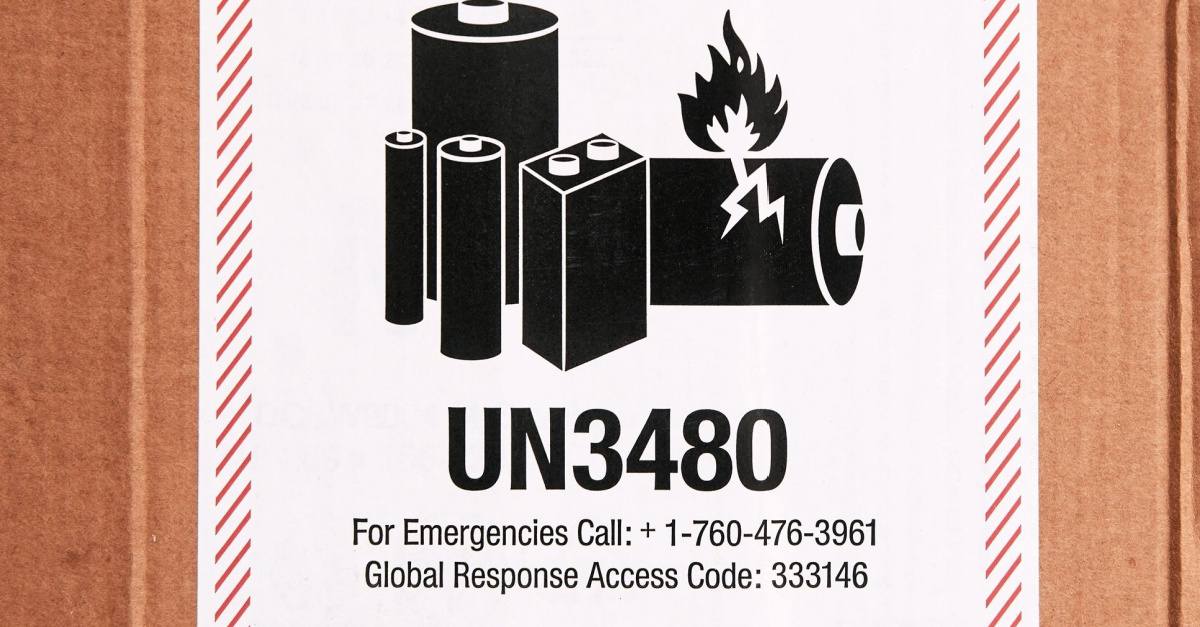
Depending on the type, wattage, and number of batteries being shipped, the required documentation and packaging can change.
Lithium batteries are used in many electronic devices such as cameras, cell phones, medical equipment, and laptop computers. When shipping or importing lithium batteries, including those contained in or packed with devices and equipment, packaging requirements must be met and package contents must be declared.
While most lithium batteries are safe, some, particularly counterfeit and outdated ones, have overheated and caught fire. Once ignited, they can cause a chain reaction with nearby batteries creating a hazardous fire which can be challenging to suppress. This is especially concerning in air transportation and is why batteries are more highly regulated for that mode of transportation.
UN Categorization
Lithium batteries fall into one of four UN Packaging Codes, with a series of packaging instruction (PI) variants for each category.
Lithium-ion batteries: UN3480
Lithium-ion batteries “packed with” or “contained in” equipment: UN3481
Lithium metal batteries: UN3090
Lithium metal batteries “packed with” or “contained in” equipment: UN3091
A lithium-ion battery attached to a laptop would be considered "contained in", the same battery detached but in the same box as the laptop would be designated as "packed with."
Start shipping today!
Start your shipment now — no login required. Fast, secure, and guided by experts.
From our glossary & FAQ

What Is a Pro Forma Invoice?
Learn what a pro forma invoice is, what it includes, and how it supports the sales process. Discover how to create a proforma invoice for smooth transactions.
Read more

What Is an Air Waybill (AWB)?
An air waybill, or consignment note, is a contract among the shipper, airline, and recipient, acting as a cargo receipt and outlining the transportation terms.
Read more
DDP vs. DAP Incoterms
DDU (Delivered Duty Unpaid) and DDP (Delivered Duty Paid) are international trade terms that indicate whether the seller or the buyer is responsible for paying customs duties and taxes.
Read more

Pharma Cold Chain Under Pressure
Pharma cold chain demand is rising while skilled labor and lane capacity stay tight. See what is driving the strain and how shippers can respond.
Read more

Emergency Medical Courier for Time-Sensitive Shipments
Mercury's emergency medical courier service moves surgical implants, specimens, and urgent pharma shipments on tight deadlines.
Read more

Business Email Compromise and Cargo Theft
Business email compromise and cargo theft now share one entry point. The controls life science shippers need to stop shipment fraud.