USMCA Tariff Exemption: How to Qualify in 2026
Biological Specimen

Key takeaways
The USMCA tariff exemption is preferential treatment for originating goods of Mexico or Canada, claimed by placing "S" or "S+" before the HTSUS subheading on the entry summary.
A USMCA certification of origin needs no prescribed format, but it must contain the data elements listed in 19 CFR 182.12 and be in the importer's possession when the claim is made.
A blanket certification can cover identical goods for up to 12 months, and importers must keep supporting records for at least five years from the date of importation.
An importer who did not claim USMCA at entry can file a post-importation refund claim within one year of the date of importation.
The 10% Section 301 tariff on products of Mexico in force since July 24, 2026 does not apply to products of Mexico entered free of duty under USMCA.
The USMCA tariff exemption lets goods that originate in Mexico, Canada or the United States enter the US at the agreement's preferential rate, which for most products is free. As of October 2026 it also matters for a second reason: the 10% Section 301 tariff that the United States applies to products of Mexico since July 24, 2026 does not apply to goods entered free of duty under USMCA. A good qualifies when it meets the product-specific USMCA rules of origin, the importer holds a valid certification of origin, and the claim is made correctly at entry.
This guide explains how to qualify for USMCA, what the certification must contain, how to claim it and how to keep the claim safe in an audit. It focuses on imports from Mexico, with notes on Canada where the rules are the same. Mexico's own import duties are a separate topic, covered in our article on Mexico's new tariffs and their impact on US supply chains. Rules change through Federal Register notices, so confirm the treatment of each product and entry date with your licensed customs broker.
What is the USMCA tariff exemption?
The USMCA tariff exemption is the preferential tariff treatment the United States grants to originating goods of Mexico and Canada under the United States-Mexico-Canada Agreement. It is claimed by the importer at entry and, for most tariff lines, results in USMCA duty-free treatment and an exemption from the merchandise processing fee. People also call it the USMCA exemption when they mean the carve-out from additional tariffs, because several US tariff actions since 2025 have excluded goods that enter duty free under the agreement.
The benefit is not automatic. Under 19 CFR part 182, subpart B, the importer makes the claim by putting the letter "S" or "S+" in front of the HTSUS subheading of each originating good on the entry summary or its electronic equivalent. Without that claim the general rate applies, even if the good would have qualified.
The agreement itself remains in force. At the first joint review on July 1, 2026, the United States did not agree to renew it in its current form, and USTR stated that the agreement remains in force pending resolution of those issues. Importers should watch the follow-up negotiations, but as of October 2026 the preference can still be claimed.
How do you qualify for the USMCA tariff exemption?
You qualify for the USMCA tariff exemption when the good is "originating" under the agreement's rules, the shipment meets the transit conditions, and you hold a certification of origin that supports the claim. Anyone asking how to qualify for USMCA tariff exemption should start with the product, not the paperwork, because a certificate cannot make a non-originating good qualify.
The USMCA rules of origin in practice
The USMCA rules of origin are set out in General Note 11 of the HTSUS and in the Uniform Regulations reproduced as Appendix A to 19 CFR part 182. A good can be originating in one of these main ways:
Wholly obtained or produced entirely in one or more USMCA countries, for example minerals extracted or animals born and raised there.
Meets the product-specific rule for its tariff line. Most rules require non-originating materials to undergo a specified change in tariff classification, and some also require a minimum regional value content.
Produced exclusively from originating materials in one or more USMCA countries.
Qualifies through an exception, such as the de minimis rule, which allows non-originating materials that fail the tariff shift if their value is not more than 10% of the transaction value or total cost of the good, with exclusions for some sectors.
For healthcare and life-science importers, the practical work is a bill of materials review. List each component, its HTSUS classification, its origin and its cost, then test the finished good against the rule for its own subheading. A diagnostic kit assembled in Mexico from Asian reagents and Mexican packaging may or may not qualify, depending on whether the reagents change classification during production. Our guide to HS codes for healthcare and life sciences explains why the classification of both the good and its inputs drives this answer.
Transit and direct shipment
An originating good can lose its preference if it is shipped outside the USMCA countries and processed there. Goods may pass through a third country only under the transit and transshipment conditions in the regulations, and CBP can deny the claim if the importer cannot show those conditions were met. Keep through bills of lading, carrier records or customs documents from the transit country with the entry file.
Re-qualify when anything changes
Qualification is a snapshot. A new supplier, a change in the bill of materials, a price change that shifts regional value content, or an HTSUS revision can all change the result. Many importers re-test products at least once a year and whenever a supplier or recipe changes, and they do not rely on qualifications made under NAFTA, because the USMCA product-specific rules differ for many lines.
What is a USMCA certification of origin?
A USMCA certification of origin is a written or electronic statement, completed by the importer, exporter or producer, that certifies a good qualifies as originating. It replaced the NAFTA certificate of origin, and there is no official government form. Under 19 CFR 182.12 it may appear on an invoice or any other document, except an invoice or commercial document issued in a non-USMCA country, and it must be in the importer's possession when the claim is made.
The certification must include the following minimum data elements:
Whether the certifier is the importer, exporter or producer.
The certifier's name, title, address, telephone number and email address.
The exporter's details, if different from the certifier, unless a producer completing the certification does not know the exporter.
The producer's details, if different, or "Various" or a list of producers. A producer may also state "Available upon request by the importing authorities" to keep its identity confidential.
If known, the importer's name, address, email and telephone number, or "Various" or a list of importers.
A description of the good detailed enough to relate it to the invoice and the HS nomenclature, and its HTSUS classification to six or more digits.
The origin criterion under which the good qualifies.
For a blanket certification, the period it covers, which cannot exceed 12 months from the date of certification.
The prescribed certification statement, signed and dated by a responsible official or authorized agent.
A properly completed certification is accepted as valid for four years from the date it was completed, but a blanket period still caps the shipments it covers at 12 months. If the certifier later learns the information was wrong, it must notify every person who received the certification and correct it.
When a certification is not required
Under 19 CFR 182.14, the importer does not need to submit a certification of origin for a non-commercial importation or for a commercial importation where the value of the originating goods does not exceed US$2,500. CBP can still demand one if it decides the shipments were split to avoid the requirement. For the reverse lane, where Mexican customs applies its own simplified courier rules, see our explainer on Mexico rule 3.7.5 for courier clearance.
How do you prove country of origin for goods from Mexico?
You prove country of origin for goods from Mexico with two different sets of evidence, because the United States asks two different origin questions. The first is preferential origin: does the good qualify for USMCA? That is proven by the certification of origin and the production records behind it. The second is non-preferential origin: is the good a "product of Mexico" for marking and for tariffs that apply by country? For goods of the USMCA countries, CBP determines marking origin under the tariff-shift rules in 19 CFR part 102.
The two answers can differ. A product can be marked "Made in Mexico" under part 102 and still fail the USMCA rule for its tariff line, or the other way round. Supplier statements that simply say "COO Mexico" are a starting point, not proof. The table below shows what a well-prepared importer keeps for each question.
Question | Rule that decides it | Evidence to keep | Who usually provides it |
|---|---|---|---|
Is the good USMCA-originating? | General Note 11 HTSUS and the Uniform Regulations | Certification of origin, bill of materials, input origins and classifications, cost data | Producer, with the exporter and importer |
What country of origin is declared and marked? | 19 CFR part 102 for goods of Mexico and Canada | Production description, marking on goods and packaging, supplier origin statements | Producer and exporter |
Did the good stay eligible in transit? | Transit and transshipment conditions in part 182 | Through bills of lading, carrier and transit customs records | Carrier or forwarder |
Was the claim made correctly? | 19 CFR 182.11 | Entry summary showing S or S+, broker worksheets | Customs broker and importer of record |
The importer carries the risk for all four rows. Under 19 CFR 182.13 the importer is responsible for the truthfulness of the claim and of the certification, even when a supplier prepared it. If you are unsure who that is in your supply chain, our glossary entry on the importer of record explains the role.
Do USMCA goods avoid the new US tariffs?
Partly. As of October 2026, USMCA goods that enter duty free under the agreement avoid the 10% Section 301 tariff on products of Mexico, but USMCA status does not by itself remove Section 232 duties, and the answer depends on the tariff action and the product.
Section 301 tariff on products of Mexico
USTR's notice of Section 301 actions of July 23, 2026 imposed a 10% tariff on products of Mexico under heading 9903.05.55, effective for goods entered on or after 12:01 a.m. eastern time on July 24, 2026. Heading 9903.05.94 states that this duty does not apply to products of Mexico entered free of duty under USMCA, and Canada has a parallel exception. The same notice excludes goods subject to Section 232 tariffs and lists products in an annex, including several chapter 30 lines such as certain blood fractions and cell therapy products, that are not covered at all. If your product's general rate is already free, ask your broker whether you still need an S or S+ claim to fall within the USMCA exception.
Section 232 tariffs
Section 232 actions, such as those on steel, aluminum and patented pharmaceuticals, follow their own proclamations. Some, such as the auto parts measures, contain their own USMCA provisions, so check each proclamation rather than assuming that USMCA status removes a Section 232 duty.Patented pharmaceutical articles under the 2026 pharmaceutical action are also excluded from the Section 301 tariff. Rates and exemptions for medicines are covered in our guide to US pharma tariffs and their exemptions.
What 9903.01.04 was
Heading 9903.01.04 appears in the USITC Harmonized Tariff Schedule as the exception for articles entered free of duty under General Note 11 as related to USMCA. In 2025 it exempted USMCA goods from the additional 25% duty on products of Mexico under heading 9903.01.01, which was imposed under the International Emergency Economic Powers Act. After the Supreme Court ruled on February 20, 2026 that IEEPA does not authorize tariffs, Executive Order 14389 ended those duties, including the order on the southern border. The temporary 10% Section 122 surcharge that followed, under Proclamation 11012, also excluded USMCA goods and ran through July 24, 2026. For entries made today, the relevant USMCA exception is 9903.05.94, not 9903.01.04. You may still meet 9903.01.04 on 2025 entries, for example when reviewing IEEPA refund eligibility, so confirm with your broker how those older entries were filed.
Claiming USMCA duty-free treatment at entry and after
A clean claim follows the same sequence every time. Confirm the HTSUS classification and the product-specific rule of origin first. Obtain or prepare the certification of origin before the goods arrive and check every data element. Give the broker the certification with an instruction to claim S or S+ on the entry summary, then check the filed entry to confirm the claim and any Chapter 99 reporting. Finally, keep the certification, the entry and the supporting records together for at least five years.
If a qualifying good entered without a claim, 19 CFR part 182, subpart D lets the importer file a post-importation claim for a refund of excess duties within one year after the date of importation. The claim needs a declaration that the good was originating, a copy of the certification of origin and statements about any protests or shared entry documents. If you discover that a claim you made was wrong, correct it promptly and voluntarily and pay any duty owed. Under 19 CFR 182.13, a prompt and voluntary correction protects the importer from penalties under 19 U.S.C. 1592 for that incorrect claim.
Records, audits and verification
An importer claiming USMCA must keep, for at least five years from the date of importation, all records showing the good qualifies, including the certification of origin and the transit records. Exporters and producers in the United States that certify goods going to Mexico or Canada carry a similar five-year duty for cost, purchase and production records.
CBP can verify a claim by sending questionnaires or requests for documents to the importer, exporter or producer, by visiting the producer's premises in Mexico or Canada, or by checking the materials used in production. If the importer cannot produce a complete certification on request, CBP may deny the preference and collect the duty, and in 2026 that can include the Section 301 tariff as well. Practical controls that hold up in verification are simple. Keep a product master file that links each SKU to its classification, origin rule, current certification and expiry date. Write supplier agreements that oblige producers to provide cost and origin data during a verification. Set reminders to renew blanket certifications before the 12-month period ends, and sample entries periodically to confirm that S or S+ was claimed where intended.
Human specimens and life-science goods from Mexico
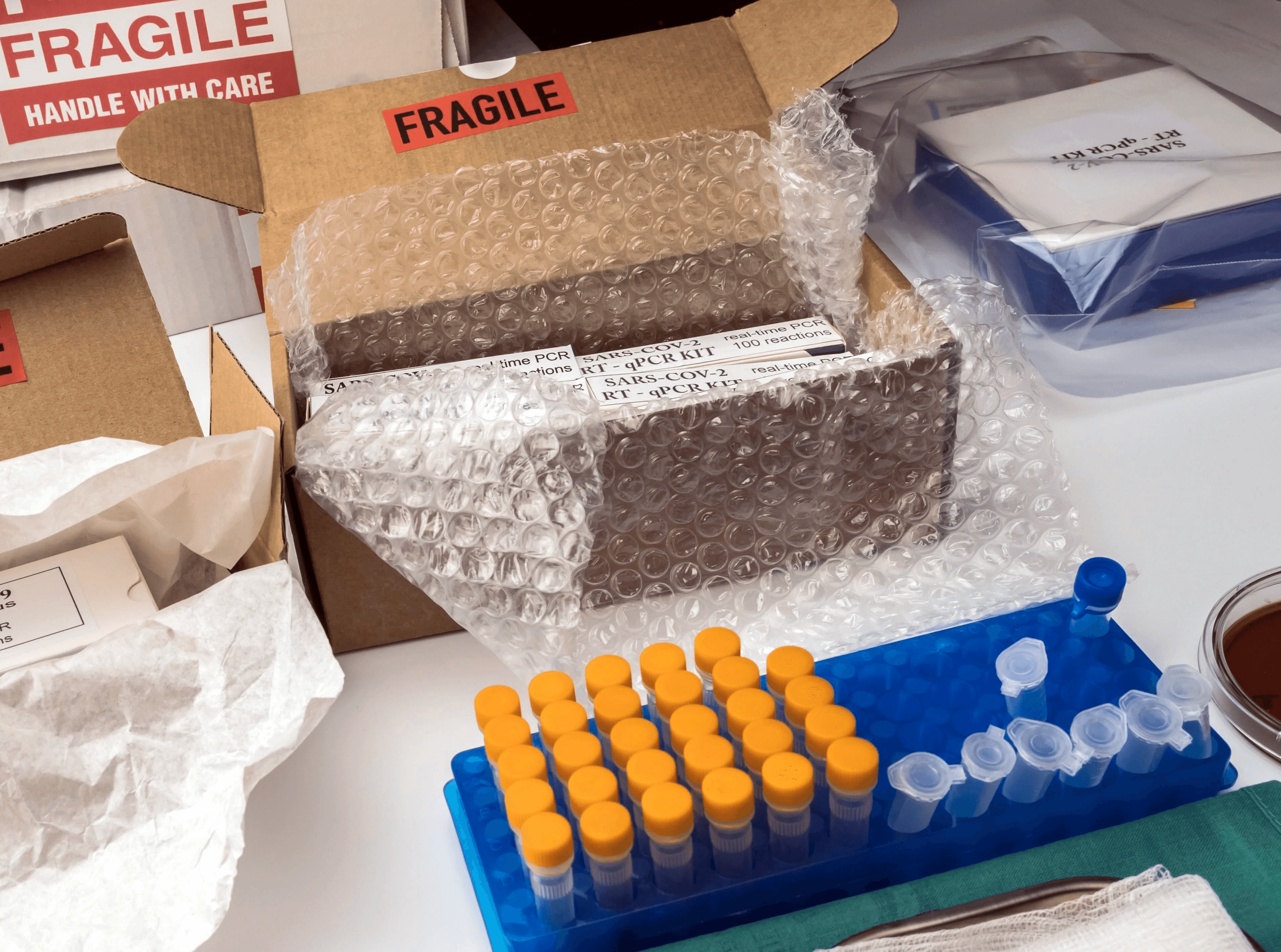
The earlier version of this article focused on human specimens shipped from Mexico. Many biological samples and reagents already carry a free general rate, so USMCA rarely saves base duty for them. Its value lies in the carve-outs from additional tariffs and in a documented origin story if CBP asks. Specimens collected in Mexico are a simple case for origin, but they still need accurate descriptions, the right import permits where applicable, and cold chain handling that protects the samples during border clearance. Goods made in Mexico from imported materials, such as kits, devices or packaged reagents, need the full rules-of-origin test described above.
Exports in the other direction follow mirror rules on the Canadian side, explained in our guide to shipping to Canada, and the cost effect of duty layers on healthcare goods is broken down in understanding tariffs and duties for healthcare.
What to confirm before your next entry
Before you rely on the USMCA exemption for a shipment from Mexico, confirm with your broker the current HTSUS line and rule of origin, whether your certification is complete and in date, which Chapter 99 headings must be reported, and whether any Section 232 action covers the product. Also watch for changes that come out of the USMCA review negotiations. Mercury's licensed customs brokerage team handles entry filing and documentation for life-science imports, and can check that a USMCA claim is filed the way your certification supports.
Start shipping today!
Start your shipment now — no login required. Fast, secure, and guided by experts.