Just-in-Time Inventory Management for Diagnostics
General

Key takeaways
Just-in-time inventory ties replenishment to real demand. It reduces waste and storage costs, but it removes the buffer that absorbs late deliveries and supplier failures.
Diagnostics kit components have defined shelf lives and temperature requirements. A delayed or temperature-excursed delivery does not just slow production. It can render the component unusable.
Demand surges during flu season or public health events expose JIT programs that depend on a single supplier or a single shipping lane.
Real-time shipment visibility is the foundation of a functional JIT system. Without it, replenishment triggers fire too late to prevent a production gap.
Mercury provides the logistics execution and cold chain infrastructure that diagnostics JIT programs depend on to run without interruption.
Precision Timing Is the Point of JIT
Just-in-time inventory management ties replenishment to actual demand rather than forecasts. Components arrive when production needs them, not weeks in advance. For diagnostics kitting, this reduces storage costs, limits component waste, and improves cash flow. But it also removes the safety buffer that covers late deliveries, supplier failures, or sudden demand spikes.
Getting JIT right in diagnostics requires more than good purchasing decisions. It requires a logistics partner who executes reliably on compressed timelines, handles temperature-sensitive components correctly, and provides real-time visibility so the supply chain reacts before a shortage develops.
How JIT Applies to Diagnostics Kitting
Diagnostics kits contain multiple components: collection tubes, reagents, swabs, control materials, and printed instructions. Each component may arrive from a different supplier. Each carries a specific shelf life and, in many cases, a required storage temperature. Ordering in bulk protects against stockouts but increases the risk of expiration and ties up capital in warehouse space.
JIT changes the order pattern. Components arrive in smaller, more frequent batches timed to production schedules. This reduces on-hand inventory and minimizes the chance that any component expires before use. For diagnostics manufacturers, where reagent stability is a regulatory concern, the reduction in expired stock carries as much value as the direct cost savings.
The model works best when every component in the kit travels on a predictable, reliable logistics lane. A single component that arrives late stops kit assembly regardless of how well-stocked all the others are. This is the constraint that makes logistics execution central to JIT performance in diagnostics.
JIT vs. Traditional Inventory: The Core Trade-Off
Dimension | Traditional Inventory | Just-in-Time |
|---|---|---|
Storage costs | High: large on-hand stock requires warehouse space | Low: smaller batches reduce floor space and cooling costs |
Expiration risk | Higher: bulk orders increase the chance of expiry before use | Lower: components arrive close to their point of use |
Disruption tolerance | High: buffer stock absorbs supplier delays | Low: any delivery failure can halt production immediately |
Cash flow | Lower: capital tied up in on-hand inventory | Higher: less working capital committed to stock |
Logistics dependency | Moderate: delays are absorbed by existing stock | High: reliable, on-time delivery is non-negotiable |
Where JIT Breaks Down in Diagnostics
JIT creates tight dependencies throughout the supply chain. A single supplier failure, a shipping delay, or an unexpected demand surge can halt kit assembly entirely. During the COVID-19 pandemic, diagnostics manufacturers that relied on lean sourcing models for swabs and reagents faced production shutdowns when single suppliers failed to deliver on compressed timelines.
The most effective JIT programs in diagnostics build in explicit recovery options. Dual sourcing for critical components, buffer rules for long-lead-time items, and expedited shipping capability for emergency replenishment all reduce the exposure that JIT creates. A logistics partner with same-day courier and next-flight-out capacity provides the recovery route that pure JIT programs need but rarely plan for explicitly.
Seasonal Demand and Supply Chain Resilience
Flu season, respiratory illness outbreaks, and public health emergencies create demand surges that JIT systems are not inherently designed to absorb. Diagnostics manufacturers that operate on tight replenishment cycles can exhaust safety stock within days when order volumes spike. Suppliers face the same pressure simultaneously, which means lead times lengthen exactly when they need to shorten.
Planning for seasonality in a JIT framework means building pre-season buffer positions for the highest-risk components, stress-testing supplier capacity against peak demand scenarios, and pre-qualifying expedited logistics lanes before the surge begins. Supply chain teams that treat these as contingency plans often activate them too late. Teams that treat them as standard operating procedure handle surges without production interruption.
Cold Chain Requirements in Component Sourcing
Many diagnostics kit components require refrigerated or frozen shipping. Reagents, biological controls, and certain collection media carry temperature stability requirements that define both the acceptable shipping method and the remaining shelf-life calculation upon receipt. Receiving a component outside its validated temperature range does not just create a quality hold. It can void the component's remaining usable life entirely.
Key compliance point: Temperature-sensitive diagnostics components must ship with continuous monitoring records. Without a complete temperature log, the receiving quality team cannot make an accurate disposition decision. For JIT programs where replacement lead times are tight, a rejected inbound shipment can stop production just as effectively as a missed delivery.
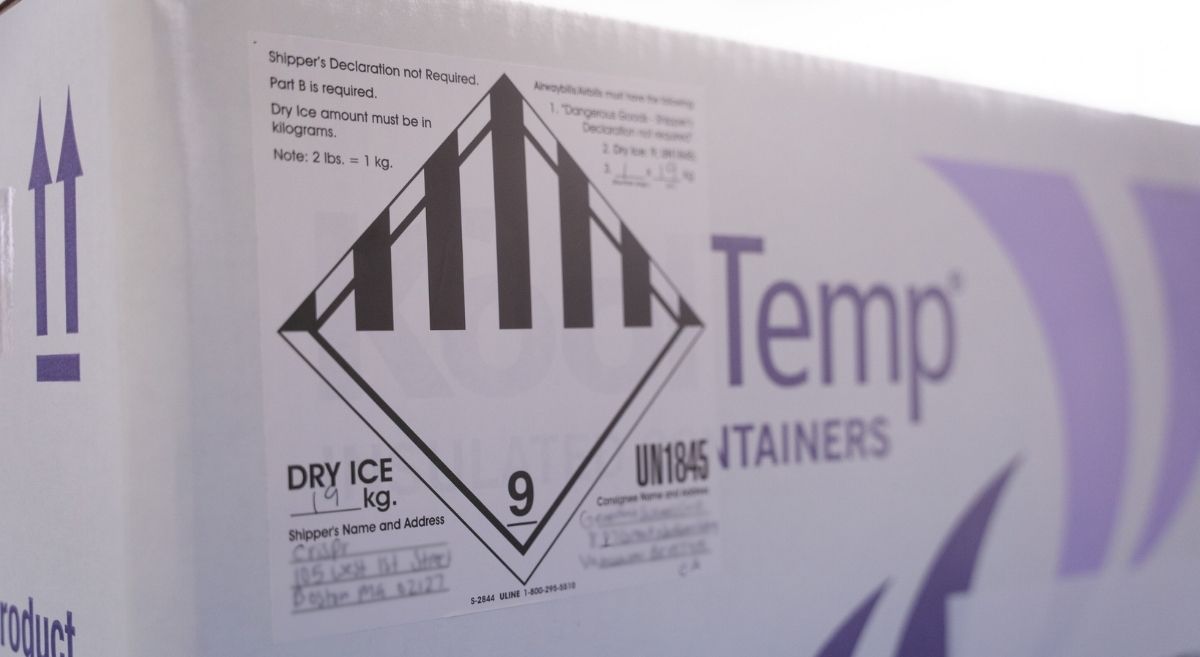
For components that require dry ice during transit, review our guide on dry ice shipping instructions to understand the handling requirements at each point in the chain. The same principles that apply to vaccine cold chain shipping apply here: lane-specific validation and continuous monitoring are not optional steps.
Inventory Visibility Drives JIT Performance
JIT replenishment depends on accurate, real-time inventory data. If stock levels update with a lag, replenishment orders trigger too late. For multi-component kits, a shortage in any single item stops assembly regardless of how well-stocked everything else is. The failure mode is predictable, and it is entirely preventable with the right visibility infrastructure.
A logistics platform that connects inbound shipment status with internal inventory data gives supply chain teams the ability to act before a gap appears. When a component shipment shows a transit delay, a team with real-time visibility can initiate a contingency order while the primary shipment is still in transit. A team without that visibility discovers the gap at receiving and responds hours later.
Good Distribution Practice guidelines require that temperature data and custody records accompany every shipment of regulated products. Integrating this documentation into your receiving workflow eliminates the manual step of requesting records after delivery and reduces quality holds caused by missing paperwork rather than actual product failures.
How Mercury Helps You Focus on What Matters
Mercury supports JIT logistics for diagnostics companies across the full range of component types. For temperature-sensitive reagents and biological controls, our specialty cold-chain service delivers within validated conditions and provides complete temperature documentation from pickup through delivery.
For expedited replenishment when standard supply timelines fail, Mercury offers same-day and next-flight-out options that recover a production schedule within hours. Our team operates around the clock, which matters when a component shortage surfaces during a weekend production run or at the start of a high-demand flu season.
Every Mercury shipment generates a digital chain-of-custody record. Receiving teams confirm inbound temperature compliance without waiting for a separate monitoring report. Quality holds based on missing documentation become the exception rather than the norm, and your quality team spends less time chasing paperwork on inbound receipts.
Mercury manages logistics execution so your supply chain, procurement, and quality teams focus on what they do best: kit development, regulatory submissions, and customer delivery. We handle freight coordination so your team does not have to.
Contact Mercury today to strengthen the logistics foundation of your diagnostics supply chain program.
SOURCES
Start shipping today!
Start your shipment now — no login required. Fast, secure, and guided by experts.