AI and Real-Time Monitoring in Cold Chain Logistics
General

Key takeaways
Cold chain monitoring is shifting from recording temperature excursions after the fact to catching problems before they happen.
AI-driven sensor systems are valuable for predictive risk scoring, but a sensor only measures what it is built to measure.
Operational risks like carrier delays and customs holds can threaten a shipment long before any sensor registers a deviation.
Mercury pairs advanced, AI-supported systems with 24/7 active human monitoring through the Mercury Portal, where a dedicated squad can intervene in minutes.
Every intervention is logged in the Mercury Portal, giving pharma and biotech shippers a documented chain of custody for GDP and GMP review.
Cold chain logistics is shifting from recording what happened to catching problems before they happen. A temperature excursion or a missed delivery window can compromise a clinical trial sample, delay a manufacturing slot, or put a patient dose at risk, so the industry is investing heavily in ways to see trouble coming.
Two models are driving that shift: automated, sensor-based real-time monitoring built on AI, and continuous human oversight built around a dedicated team watching every shipment. Understanding what each one actually catches matters more than the label attached to it.
How AI driven real time monitoring works
AI-powered cold chain systems pull data from IoT sensors, GPS trackers, and historical shipment patterns to flag risk before a delivery goes out and to predict a likely temperature excursion while a shipment is in transit. Predictive models can score a route's risk based on weather, carrier history, and border conditions (Paxafe).
This approach is genuinely valuable. It gives shippers a data trail and an early alert when a sensor reading drifts out of range, and it scales across large shipment volumes without needing a person watching every box.
The limitation is that a sensor only reports what it is built to measure. A carrier delay, a stalled customs clearance, or an unexpected route change can put a shipment at risk long before any sensor ever registers a temperature deviation.
Where human oversight closes the gap
Continuous, human monitored tracking is built to catch the operational risks a sensor cannot see on its own. A dedicated team watching a shipment can recognize that a connection was missed, a customs hold started, or a carrier rerouted a truck, and act while the shipment is still recoverable.
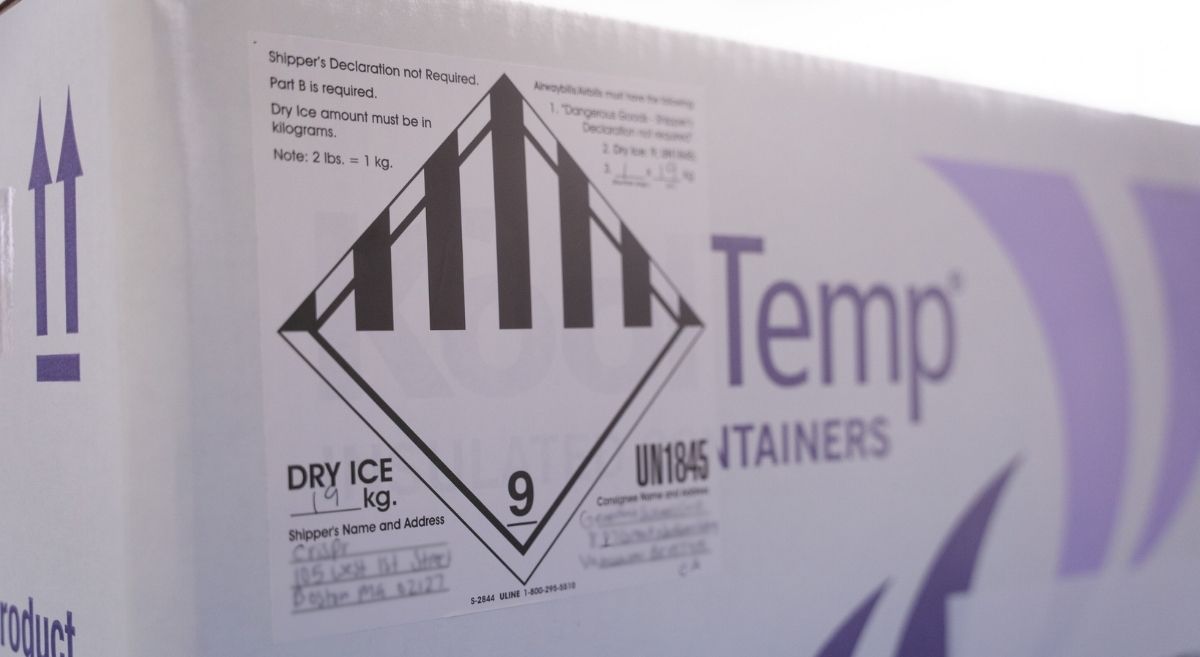
That could mean rerouting a shipment around a delay, escalating a stalled clearance, or arranging backup dry ice before a connection is missed. Each of these interventions happens while there is still time to protect the product, not after a compromised reading shows up in a report.
Passive data logging tells a shipper what already happened. Active oversight, whether sensor driven or human led, is judged by what it catches before the shipment is lost, not by how much data it produces afterward.
Neither model works well in isolation. A shipper relying only on automated alerts still needs someone to act on them fast, and a shipper relying only on human oversight without good data is working with less warning than they could have. The strongest setups combine both.
Why this matters for clinical trial and GMP shipments
Clinical supply managers work with drug product that is expensive, time critical, and subject to strict chain of custody requirements under GDP and GMP. A missed manufacturing slot or a compromised investigational product can cost weeks of trial timeline.
Documentation matters as much as prevention here. Every intervention, handoff, and status update needs to be captured in a way that gives pharma and biotech shippers a documented chain of custody a quality team can review.
For clinical trial sponsors and CDMOs, that combination of proactive intervention and documented visibility reduces the risk that a single logistics disruption compromises an entire shipment or study milestone.
On the biospecimen side, clinical operations teams juggling multiple protocols benefit the same way: a 24-hour turnaround window leaves little room for a missed connection, and catching a delay early can mean the difference between a usable specimen and a patient redraw.
That is the direction the industry is heading. Predictive models get better at flagging risk earlier, and the teams acting on those signals get faster at intervening, so the gap between a warning and a resolved shipment keeps shrinking for shippers who invest in both sides of the equation.
How Mercury approaches it
Mercury's operations run on advanced, AI-supported systems across the business, and shipment visibility specifically runs through the Mercury Portal, where a dedicated squad, not a call center, actively watches every cold chain shipment around the clock from pickup to final delivery.
That pairing matters. Technology extends what a team can see and predict, but the interventions that actually save a shipment, rerouting, escalating, arranging backup packaging, still come from people who know the account and can act in minutes. Every one of those actions is logged in the Mercury Portal, giving shippers the documented trail their quality teams need.
Mercury is GDP certified and ISO 9001:2015 certified, and pairs that compliance foundation with the operational habit of catching problems early rather than only documenting them afterward. That combination is what a quality team and a clinical operations team both need from a logistics partner.
What shippers should look for in a logistics partner
As cold chain networks grow more complex, with more temperature ranges, more carriers, and more regulatory checkpoints, the value of pairing technology with active human oversight only increases. Shippers need a partner watching the shipment, not just recording it.
When evaluating a partner, ask how a delay is actually caught, who intervenes, and how quickly. A sensor reading or a packaging validation only tells part of the story once the box has already left the dock.
Ready to see how proactive shipment monitoring protects your cold chain shipments? Contact our team to learn more about the Mercury Portal.
Start shipping today!
Start your shipment now — no login required. Fast, secure, and guided by experts.