Nine Classes of Hazardous Materials
Dangerous Goods
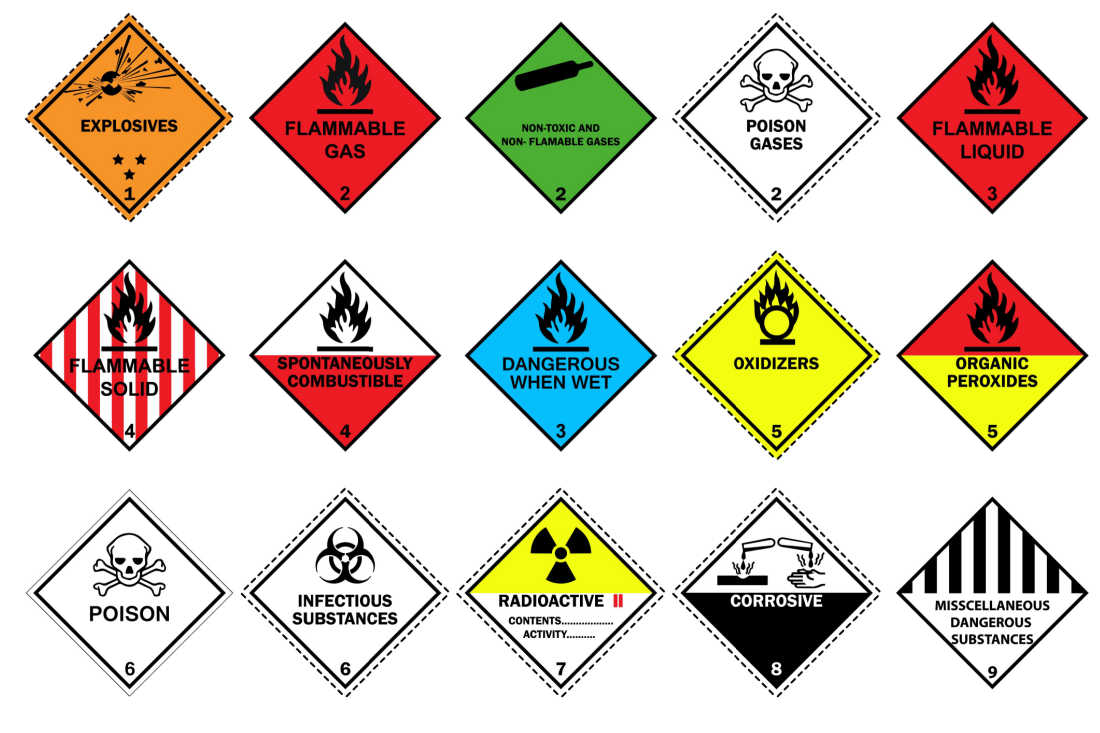
Let’s look at the nine different dangerous goods classes with examples of each:
1. Explosives (Class 1): These substances and articles can cause explosions or release dangerous gases, such as fireworks, various ammunition types, or flares.
2. Gases (Class 2): These gases can be compressed, liquified, or dissolved under pressure. Gases can be further divided into three divisions: flammable, non-flammable, and toxic gases. Examples of gases include propane, oxygen, or chlorine.
3. Flammable Liquids (Class 3): Liquids that have a flashpoint below 60°C (140°F) are considered flammable. Gasoline, acetone, and ethanol are common examples here.
4. Flammable Solids (Class 4): These substances can easily ignite or contribute to a fire when in contact with an ignition source. Matches, sulfur, and certain metals fall under this class.
5. Oxidizing Substances and Organic Peroxide (Class 5): These substances provide oxygen, which can intensify fires or cause combustion. Examples include hydrogen peroxide and ammonium nitrate.
6. Toxic (Poison) and Poison Inhalation Hazard (Class 6): These substances can cause severe illness or death when exposed to living organisms. Pesticides, certain chemicals, and infectious substances fall under this category.
7. Radioactive (Class 7): These are hazardous materials that emit ionizing radiation. Examples include uranium and plutonium. Radioactive materials can also be found within medical devices, such as X-ray equipment and CT scanners.
8. Corrosive Substances (Class 8): Corrosive materials can cause damage to living tissues or materials upon contact. Common examples include sulfuric acid and sodium hydroxide. UN 1760 belongs to Class 8.
9. Miscellaneous Dangerous Goods (Class 9): These substances present a significant risk during transportation but do not fit into any of the other hazard classes. Examples of class 9 dangerous goods include lithium batteries, asbestos, and dry ice. When shipping perishable products, such as biological specimens used in research, on dry ice as a coolant (UN 1845), it is important to understand that it is classified as a regulated dangerous good under IATA DG regulations.
On the other hand, blue ice and gel packs that are also coolants are non-hazardous and NOT considered dangerous goods.
Start shipping today!
Start your shipment now — no login required. Fast, secure, and guided by experts.
From our glossary & FAQ

What Is a Pro Forma Invoice?
Learn what a pro forma invoice is, what it includes, and how it supports the sales process. Discover how to create a proforma invoice for smooth transactions.
Read more

What Is an Air Waybill (AWB)?
An air waybill, or consignment note, is a contract among the shipper, airline, and recipient, acting as a cargo receipt and outlining the transportation terms.
Read more

DDP vs. DAP Incoterms
DDU (Delivered Duty Unpaid) and DDP (Delivered Duty Paid) are international trade terms that indicate whether the seller or the buyer is responsible for paying customs duties and taxes.
Read more

Pharma Cold Chain Under Pressure
Pharma cold chain demand is rising while skilled labor and lane capacity stay tight. See what is driving the strain and how shippers can respond.
Read more

Emergency Medical Courier for Time-Sensitive Shipments
Mercury's emergency medical courier service moves surgical implants, specimens, and urgent pharma shipments on tight deadlines.
Read more

Business Email Compromise and Cargo Theft
Business email compromise and cargo theft now share one entry point. The controls life science shippers need to stop shipment fraud.